What buyers hear about your brand
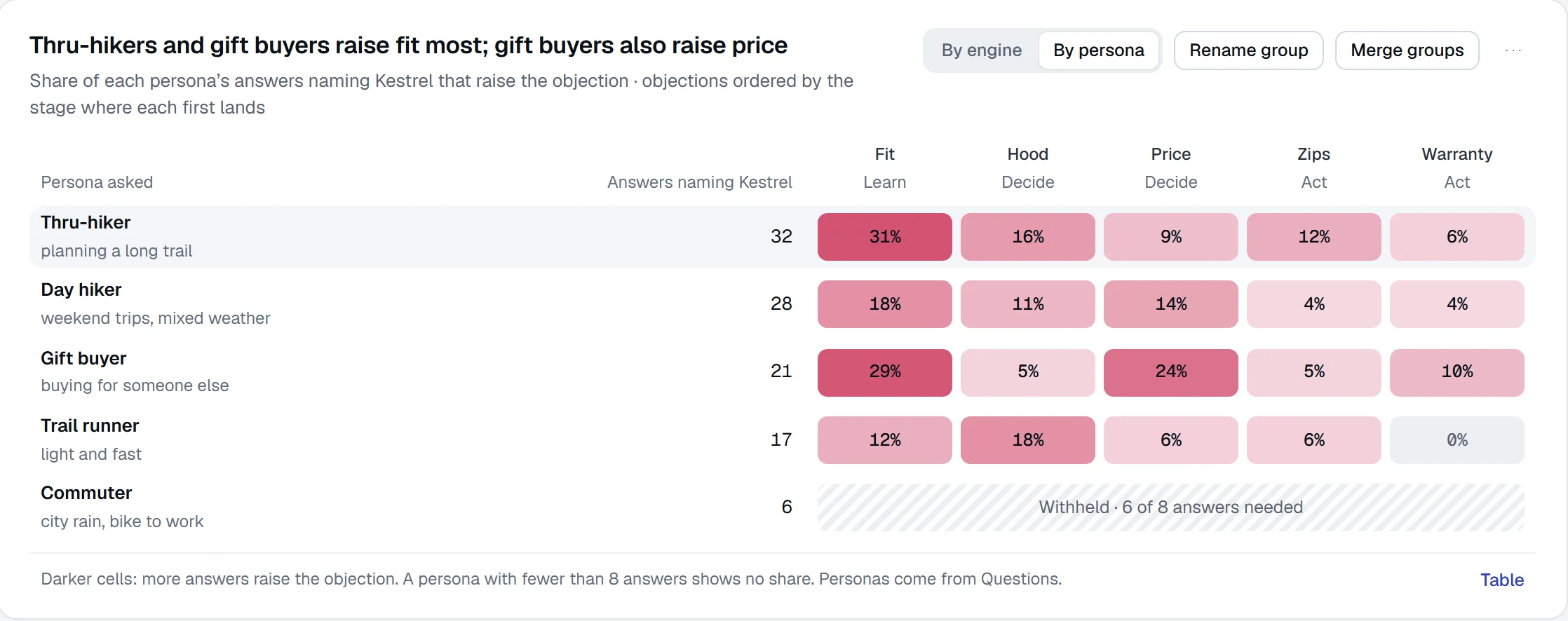
The strengths, limits and objections engines repeat about you and each competitor, by the kind of buyer asking.
Brand perception
Find what AI tells buyers about your brand: the strengths engines repeat, the objections they raise and the buyers they say you suit.
Accounts open from the waitlist. The website check is free, with no signup.

The strengths, limits and objections engines repeat about you and each competitor, by the kind of buyer asking.
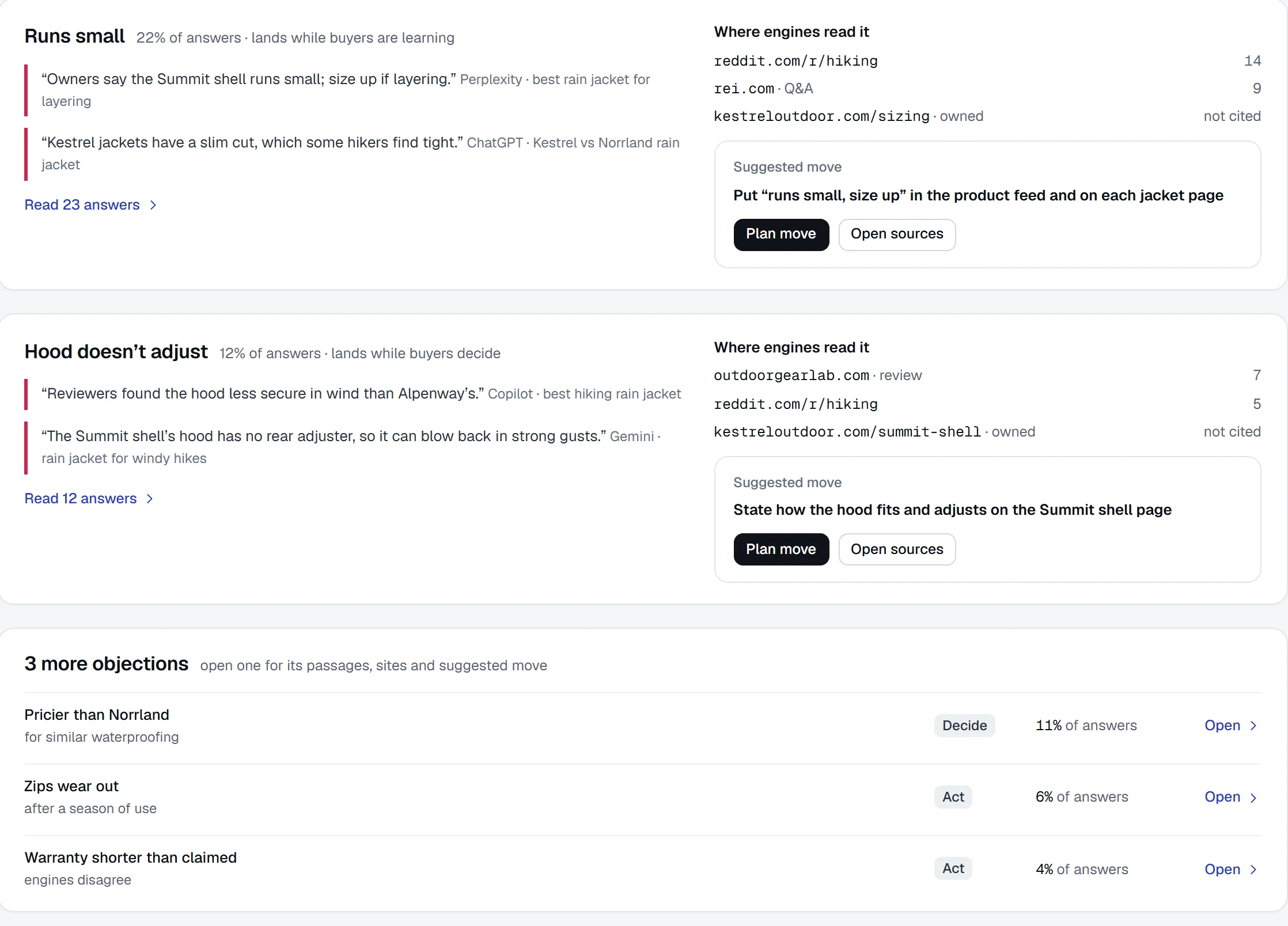
Open an objection to read the answers that repeat the claim, the passage behind each one and the forums, reviews or owned pages behind the claim.
Work on the sources behind an objection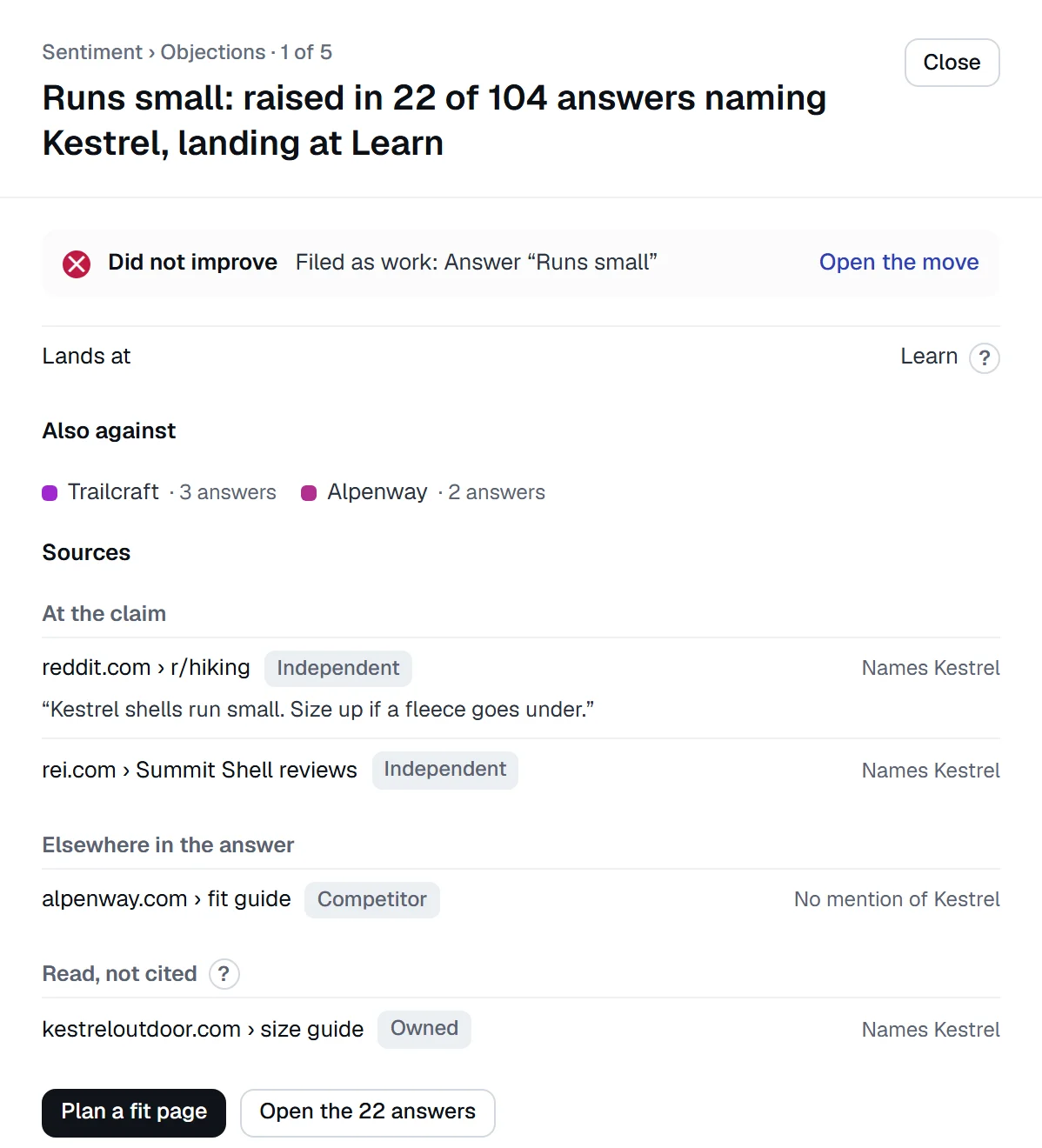
A wrong fact needs a correction at the source. A real limitation needs clearer product information. A buyer the answers leave out needs a page written for that buyer.
Write the page in content & site optimization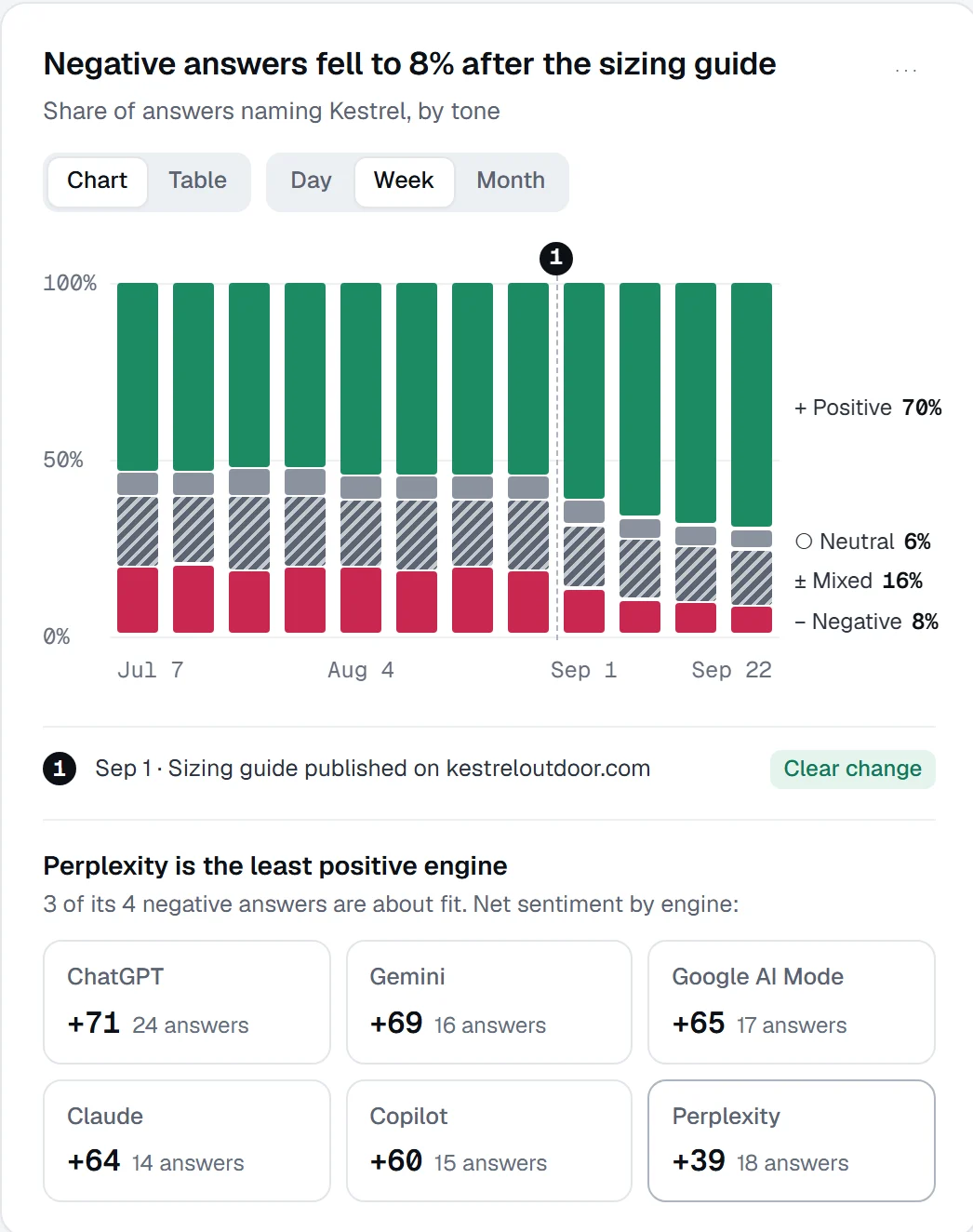
A mostly positive score can hide one complaint that repeats on every engine. Find that complaint before buyers do.
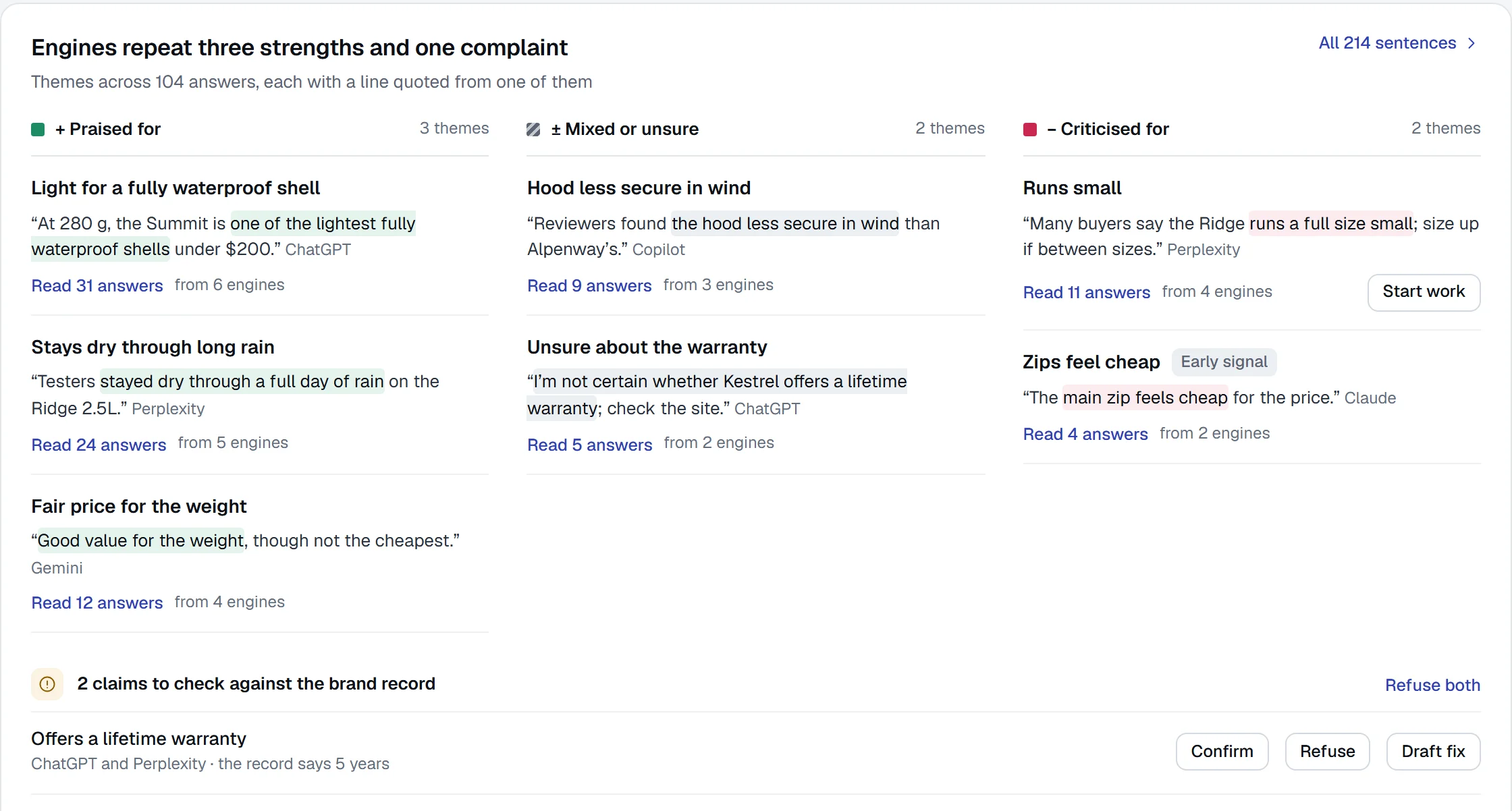
1Find what engines praise about your products, what they criticise, and the claims they make that your records do not support.
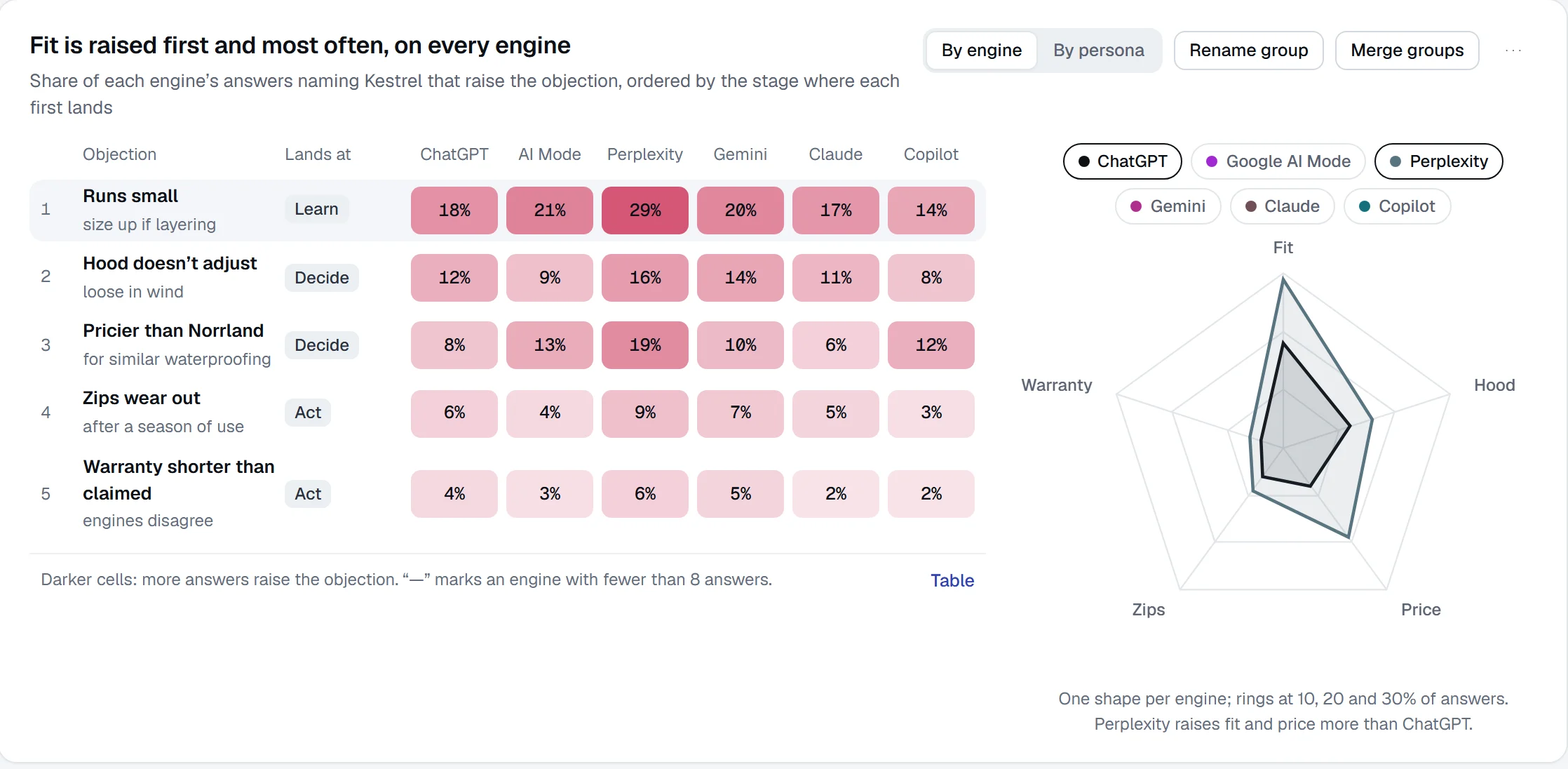
2Find the objection every engine repeats, and the buying stage where it reaches buyers.
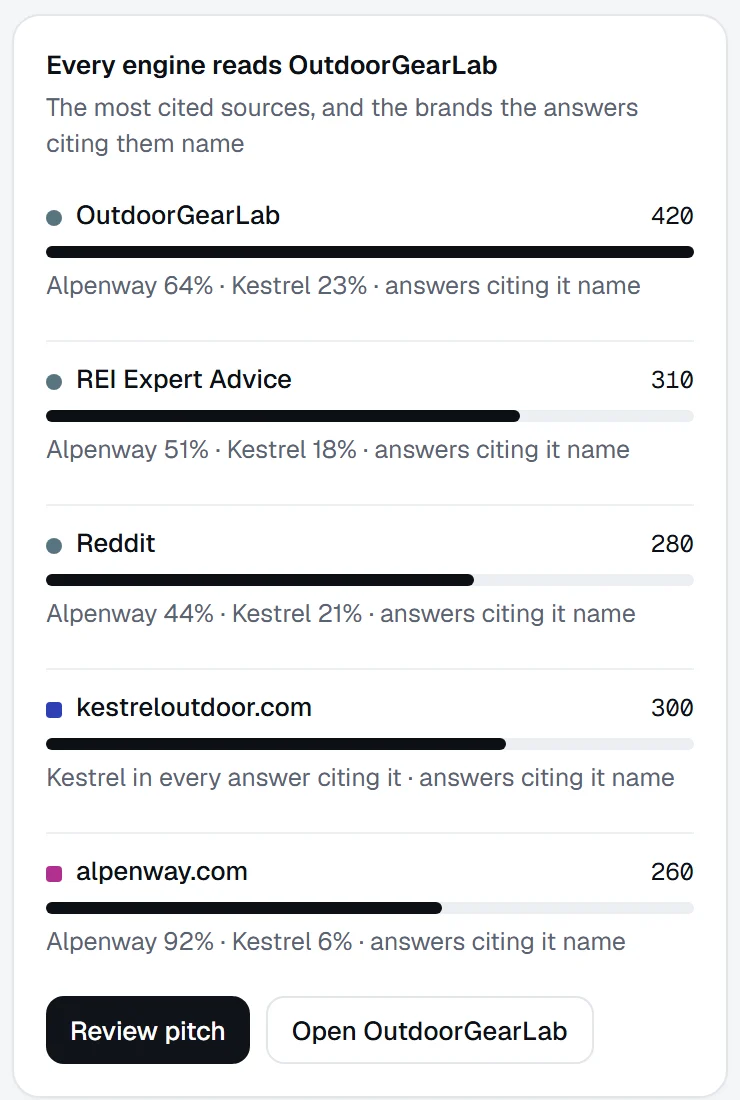
3Trace the objection to the sources engines take it from, and fix what your own pages say.
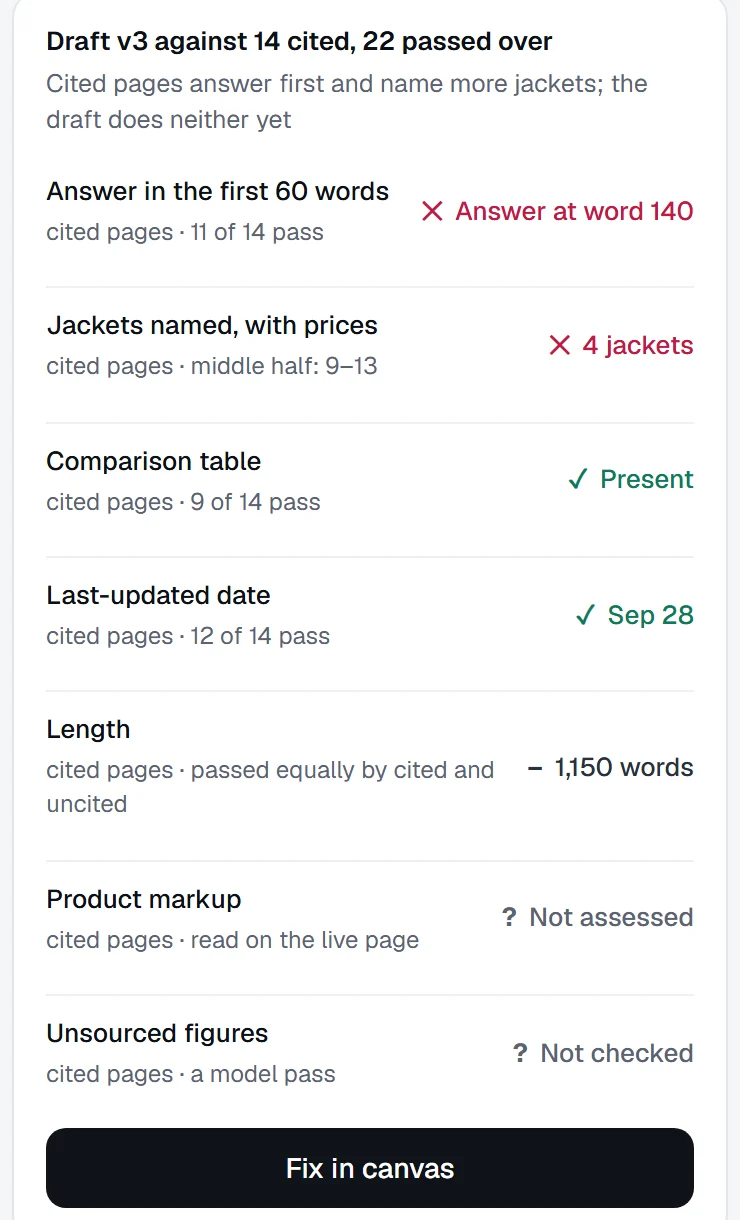
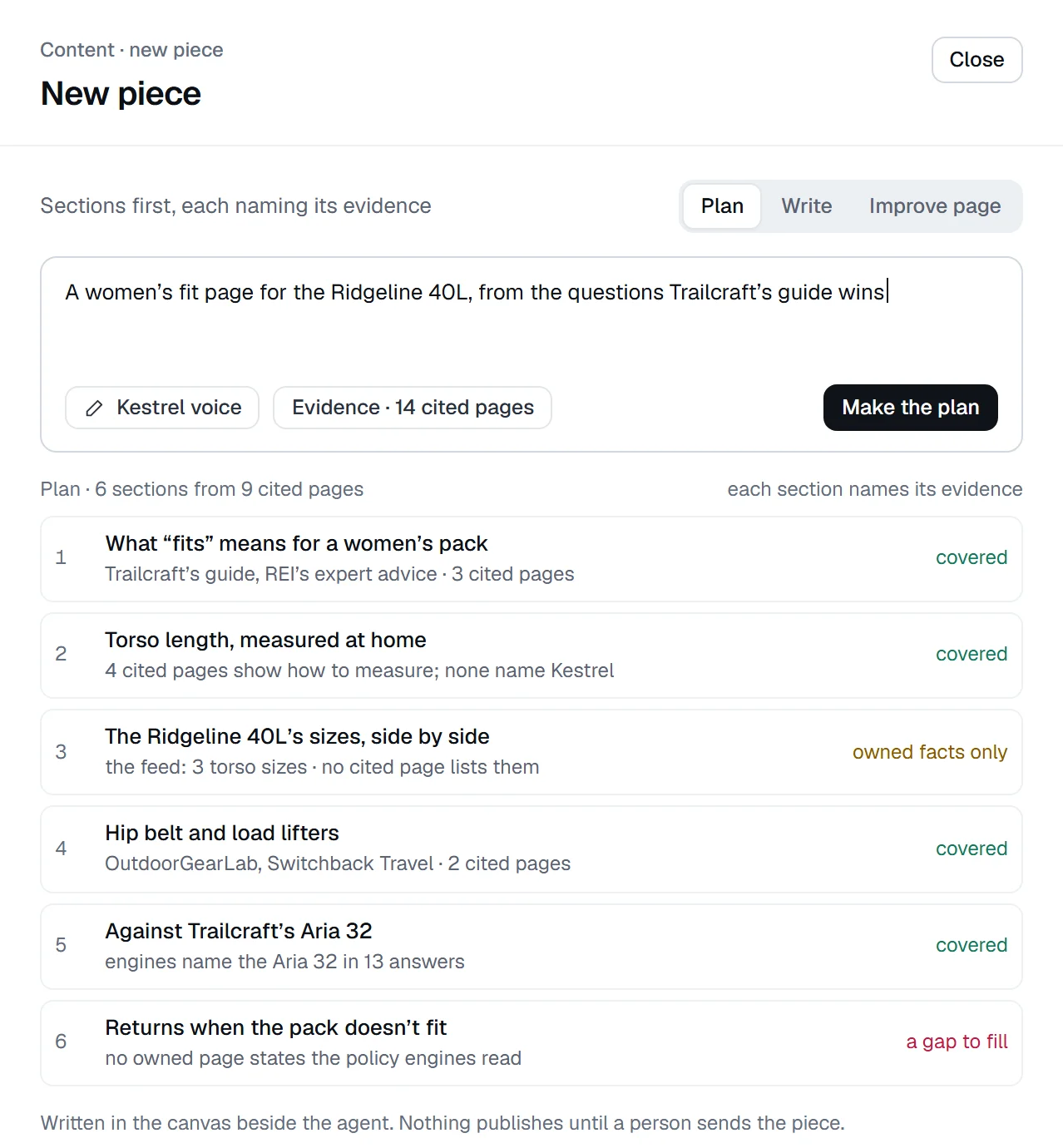
4When answers leave a buyer out, plan a page for that buyer from the questions a competitor wins, each section built on the pages engines cite.
Something else on your mind? Contact us.
No. Tone is one reading. You also get the attributes engines discuss, the objections they raise, the buyers they say you suit and the passages behind each one.
No. Correct a description when the fact is wrong. When a limitation is real, explain who the product suits and how to choose; when the answers leave a buyer out, write for that buyer.
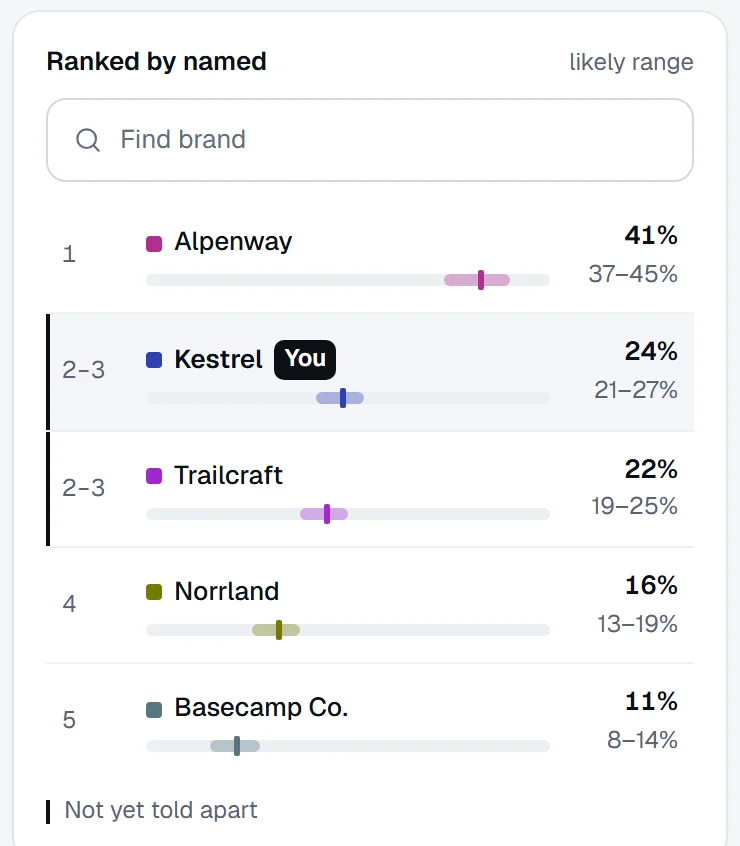
Yes. Tone, attributes and objections are read for every tracked competitor in the same answers. Find where a competitor is described as the better fit for a buyer you want.
It checks a public page’s readiness to be found, understood and cited. Ongoing tracking and work belong in the platform.
Find the objection behind a lost recommendation, choose the response that fits and follow the answers after the work ships.