Start from a question, phrase, competitor or page
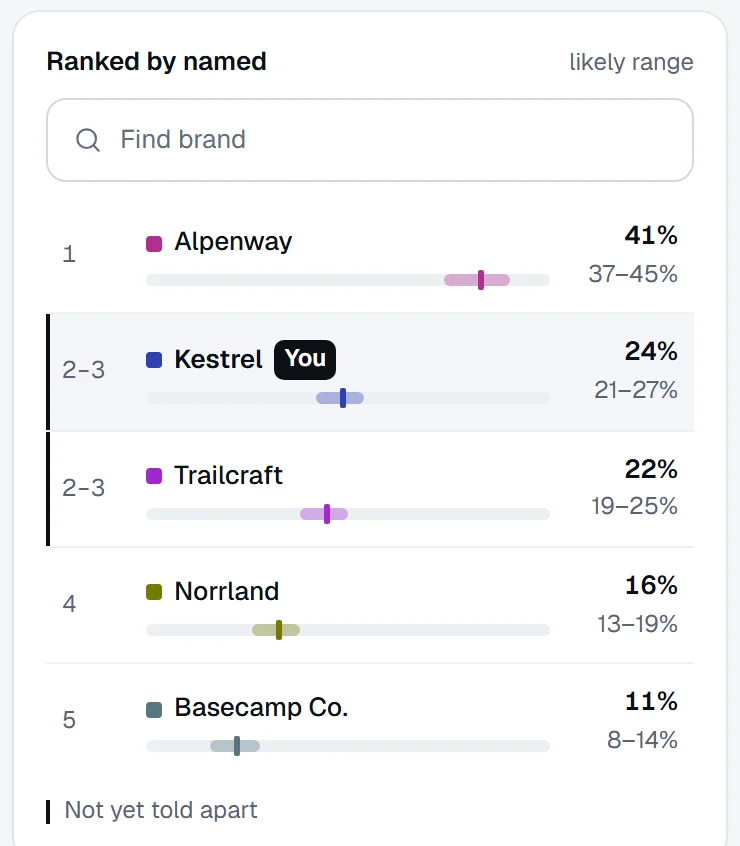
Look up a question to find who each AI platform picks. Look up a phrase for monthly searches and difficulty, or a competitor’s domain for the phrases they win.
Track the questions you research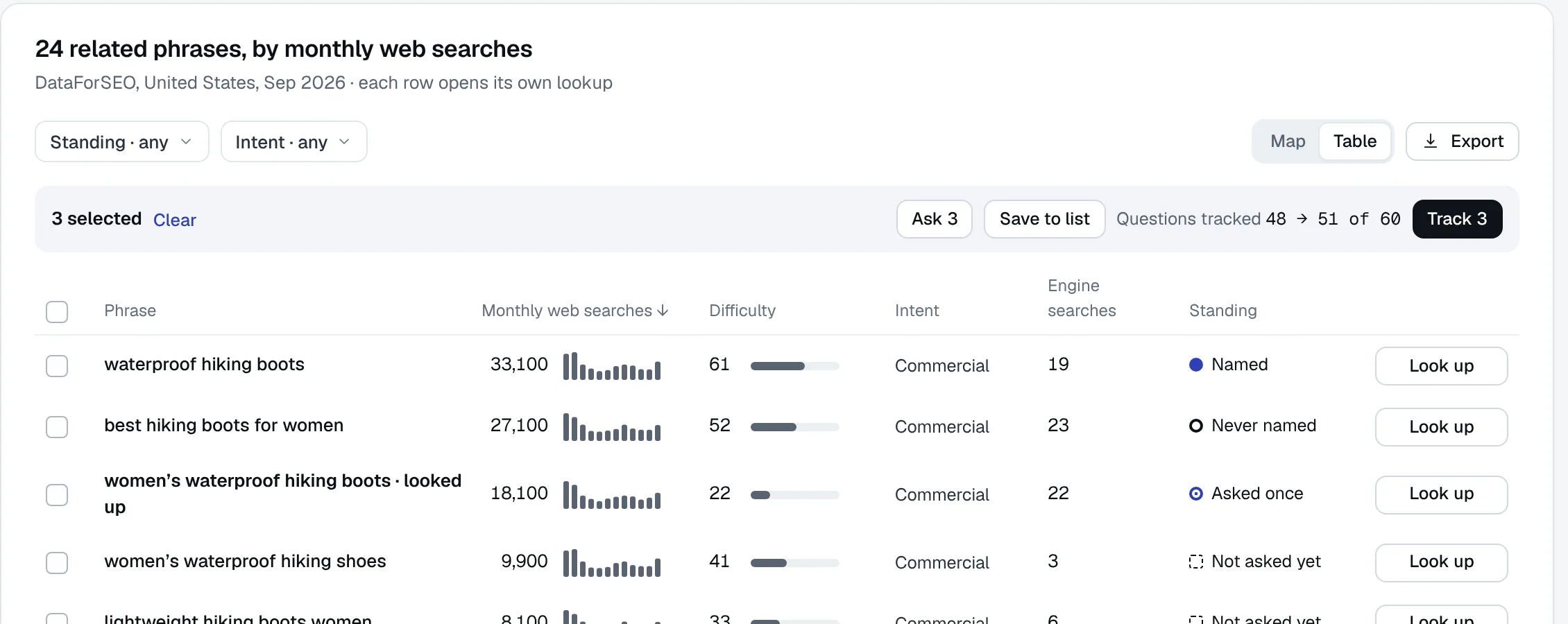
Research & opportunities
Look up a buying question, phrase, competitor or page to find who AI picks today, what buyers search for and what to do next.
Accounts open from the waitlist. The website check is free, with no signup.

Look up a question to find who each AI platform picks. Look up a phrase for monthly searches and difficulty, or a competitor’s domain for the phrases they win.
Track the questions you researchA lookup ends in a decision: track the question, refresh a page you own or create one. The phrase map shows what no tracked question covers yet.
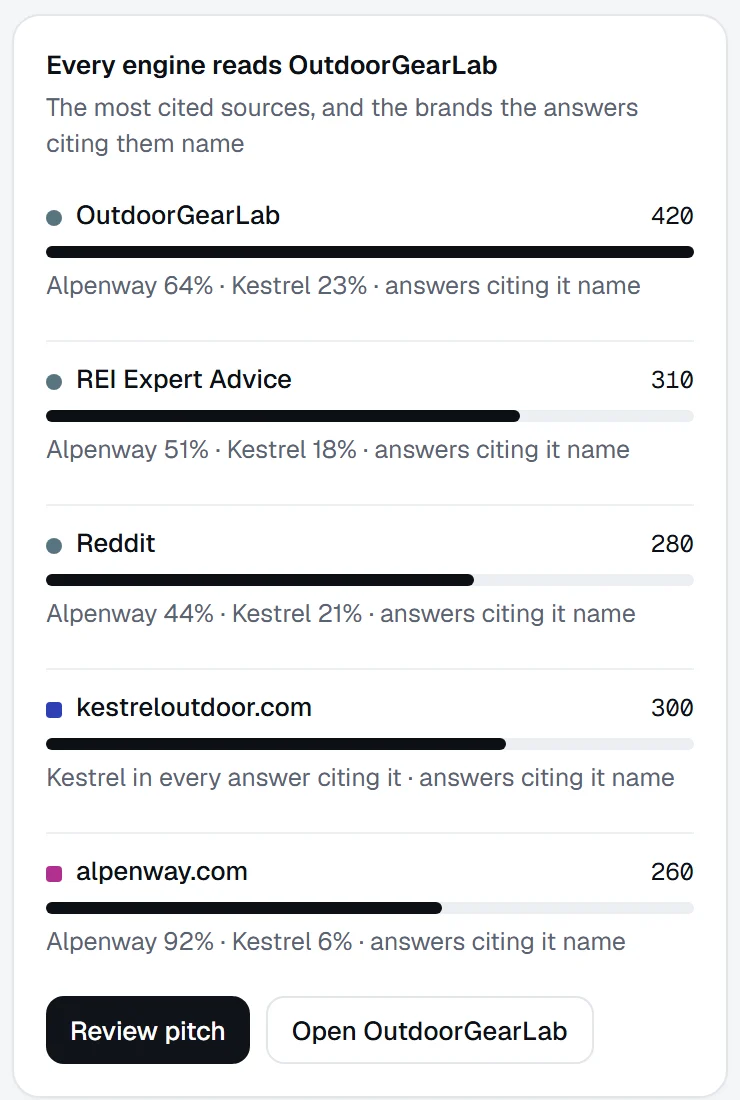
Inspect the sources behind the answers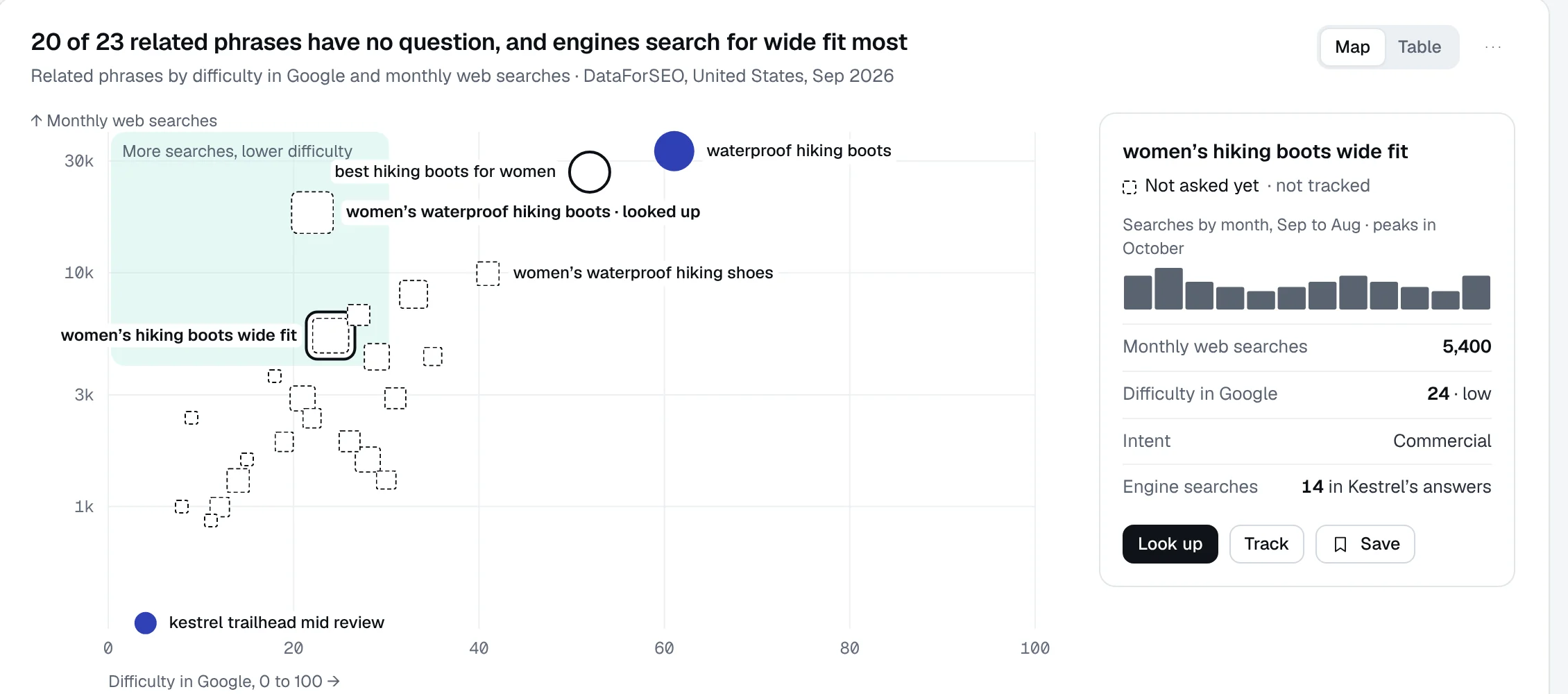
A lookup asks each platform once. Tracking adds the question to your weekly readings. Writing carries the answers and searches into the brief.
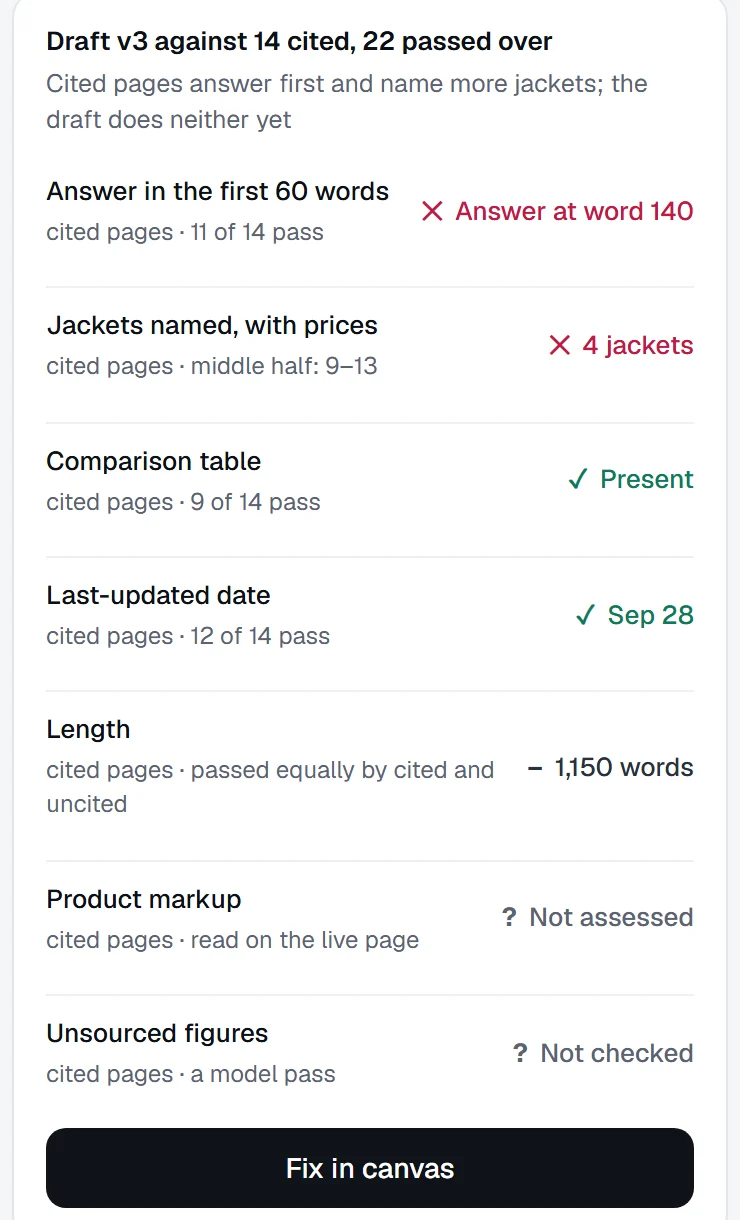
Turn this finding into a page brief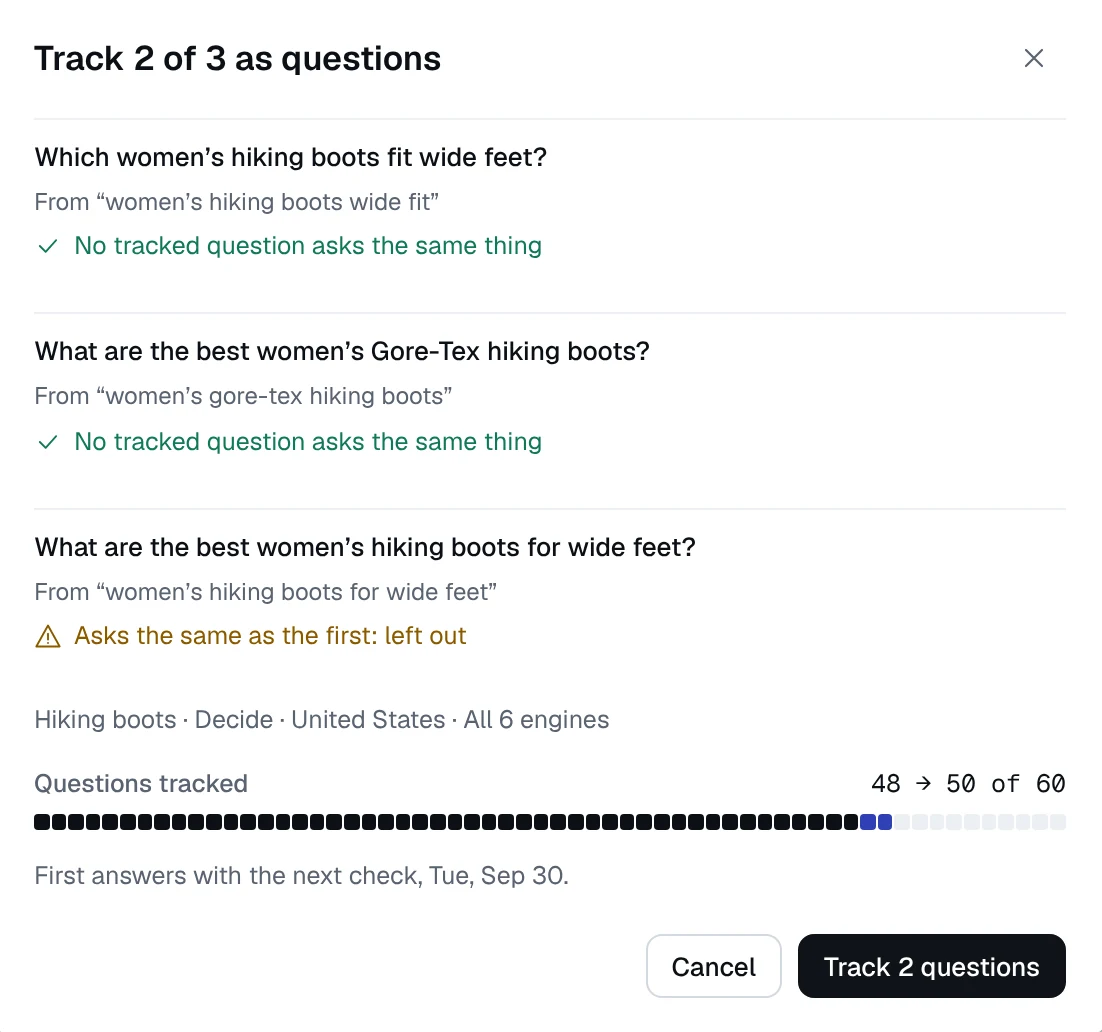
When a competitor wins questions you want, a lookup shows which response the evidence supports: a new guide, a refresh of an existing page, or a pitch to a publisher.
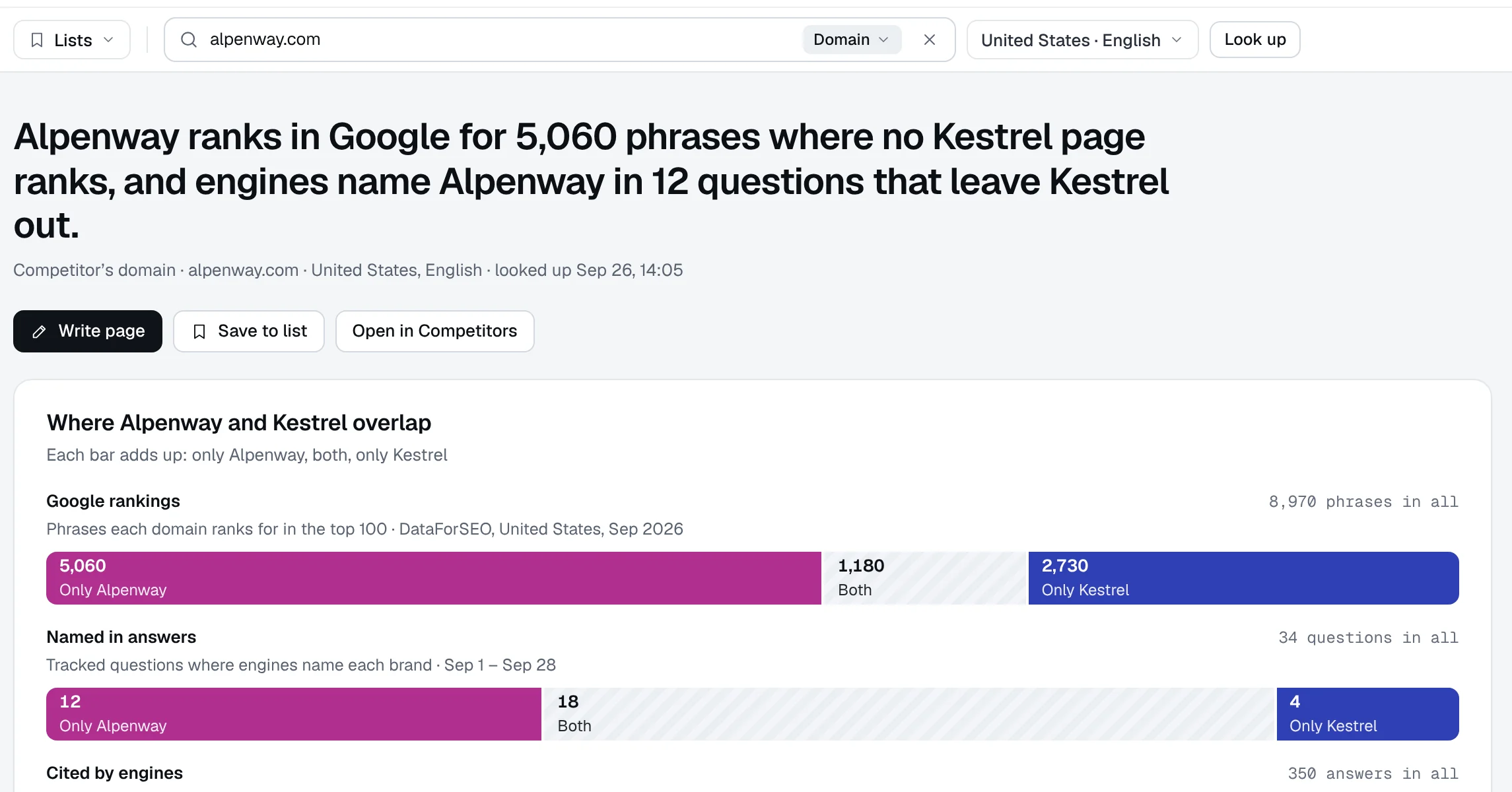
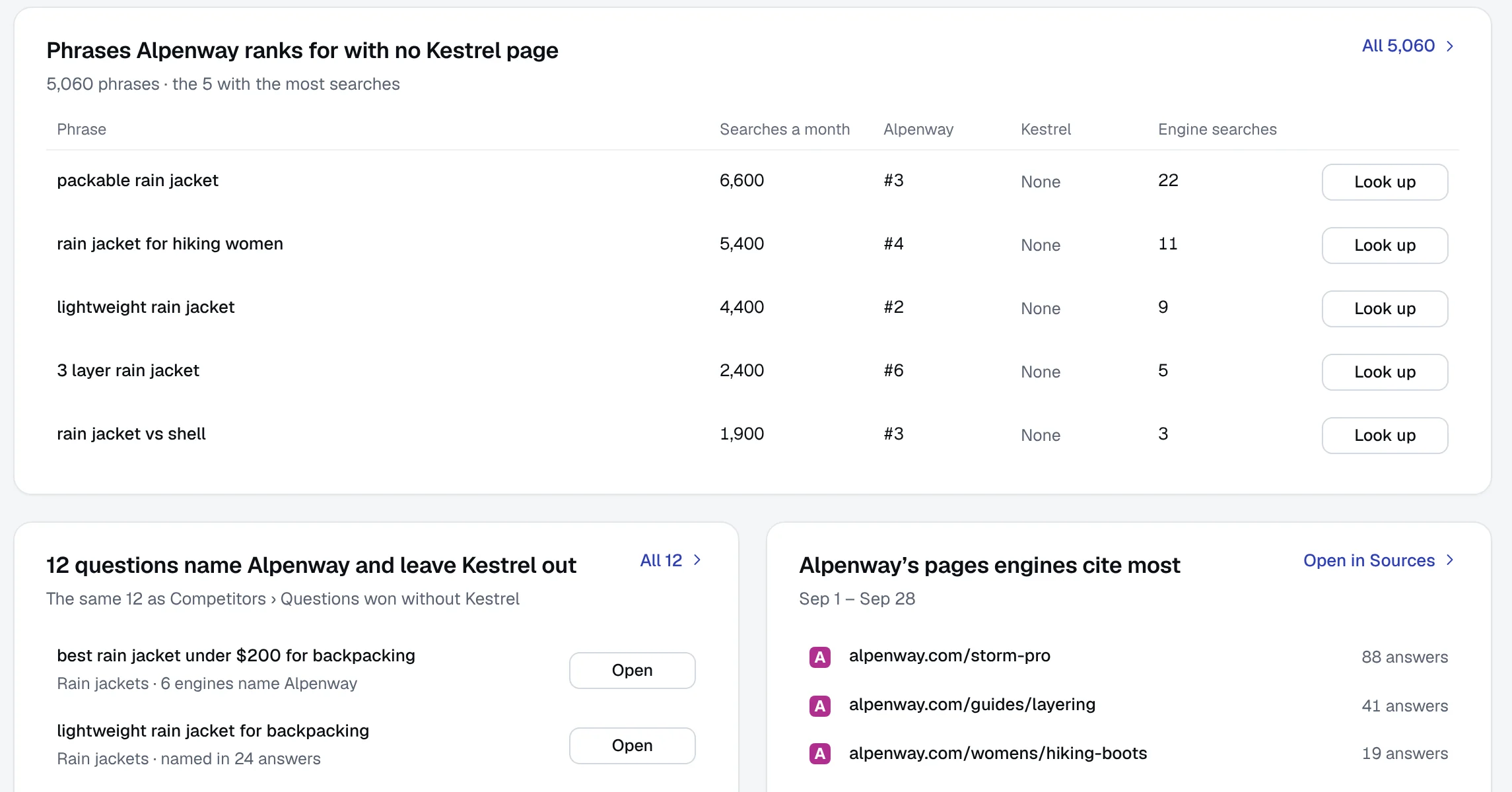
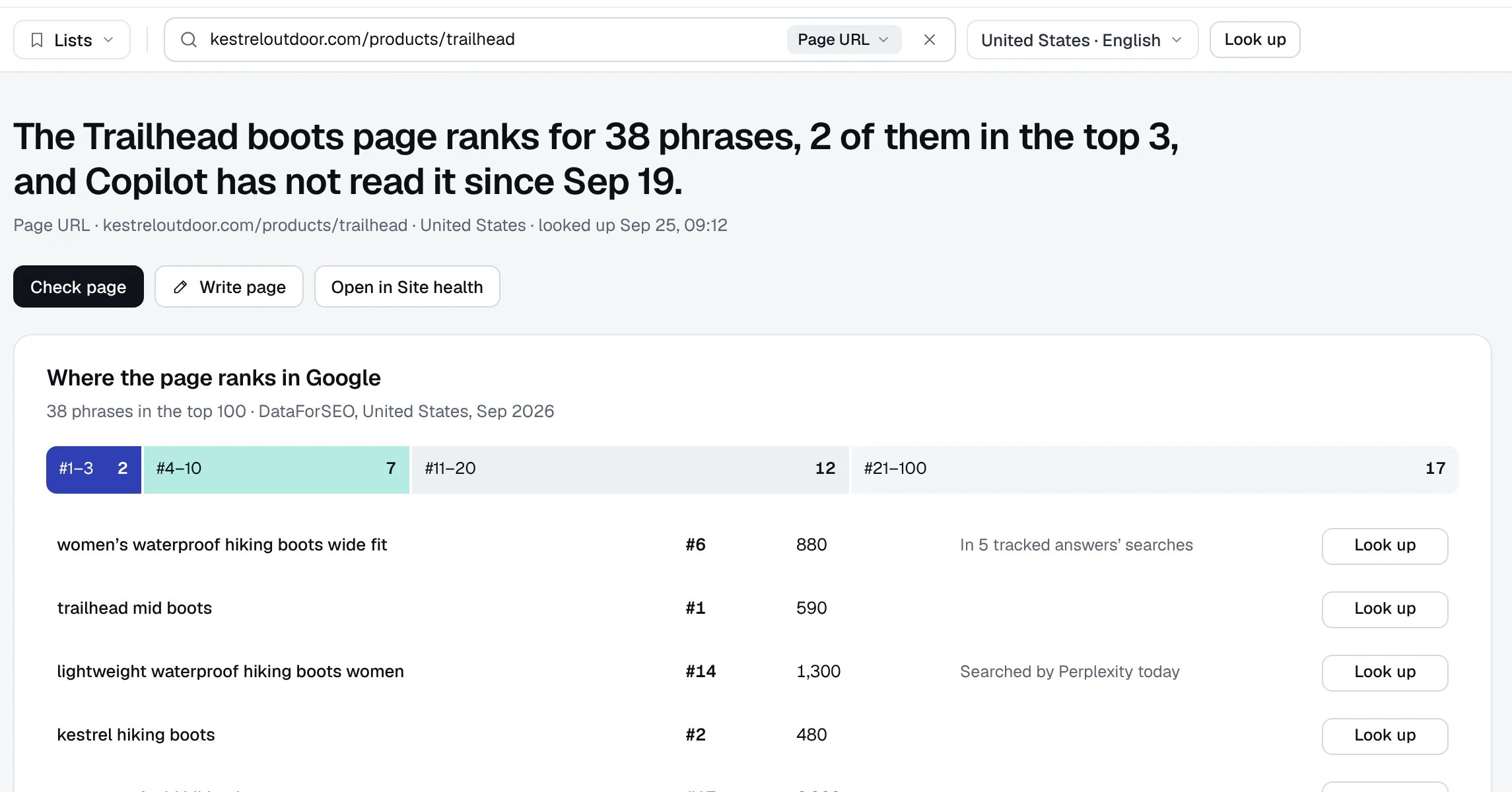
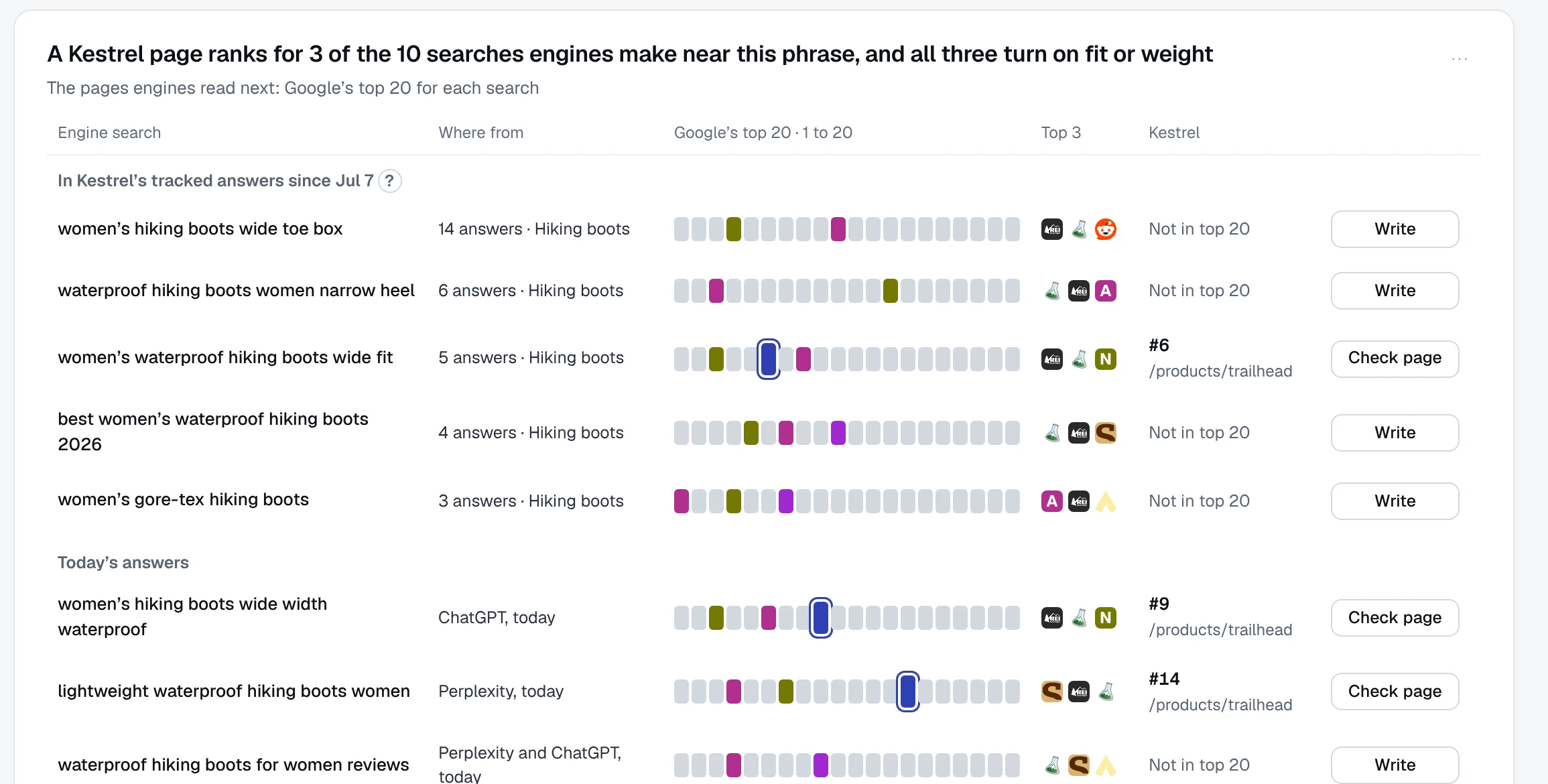
1Look up a competitor’s domain to find the phrases they rank for where you have no page, and the questions engines answer with them and without you.
2Find which of the competitor’s pages engines cite most for those questions.
3Check whether you already have a page in the race: the phrases the page ranks for, and when each engine last read the page.
4When a page is close, refresh it instead of starting a new one, and track the question to read the result.
Something else on your mind? Contact us.
No. A lookup asks the AI platforms once and keeps the result. Track the question only when you want the answers in your weekly readings.
No. Monthly searches come from web search data. Engine searches count the searches AI platforms run while answering your questions. Each answers a different question, and research shows both.
Yes. Enter a competitor’s domain to find the phrases they rank for where you have no page, the tracked questions engines answer with them and not you, and their pages engines cite most.
It checks a public page’s readiness to be found, understood and cited. Ongoing tracking and work belong in the platform.
Look up the question, then decide whether to track it, refresh a page, create one or pursue a source, with the evidence carried into whatever comes next.