Solutions · Brand & PR
Work on the story AI tells about your brand.
Find the part of AI’s description that holds you back, then take the right response to the pages and publications engines read.
Accounts open from the waitlist. The website check is free, with no signup.

Position
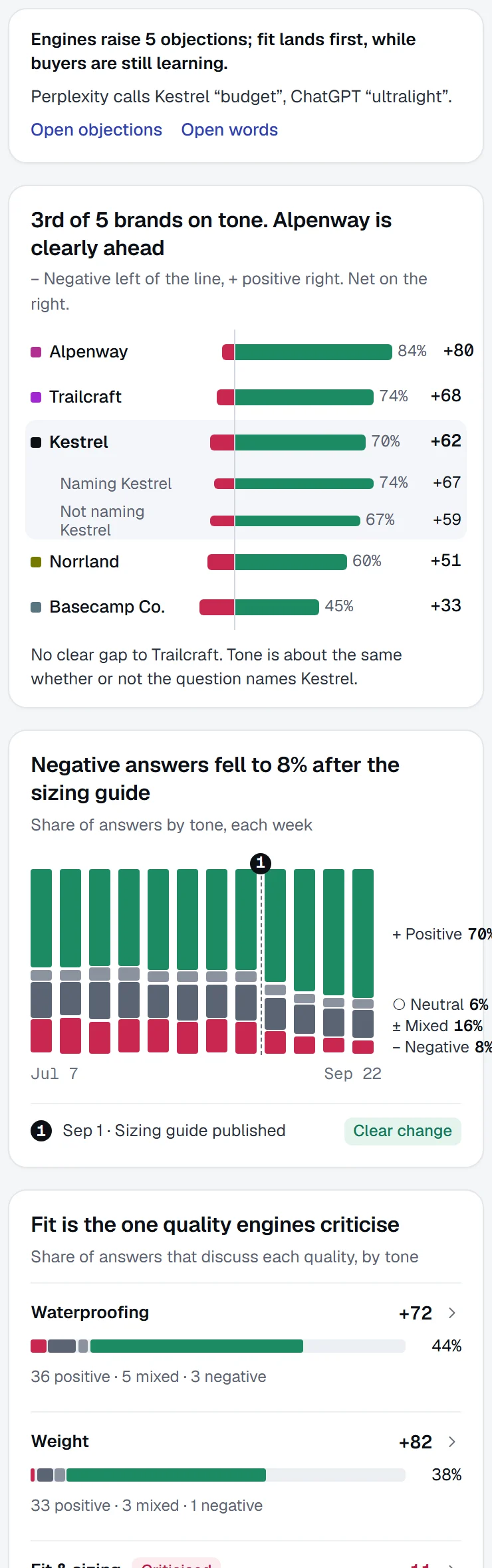
Read the description buyers meet before they reach you
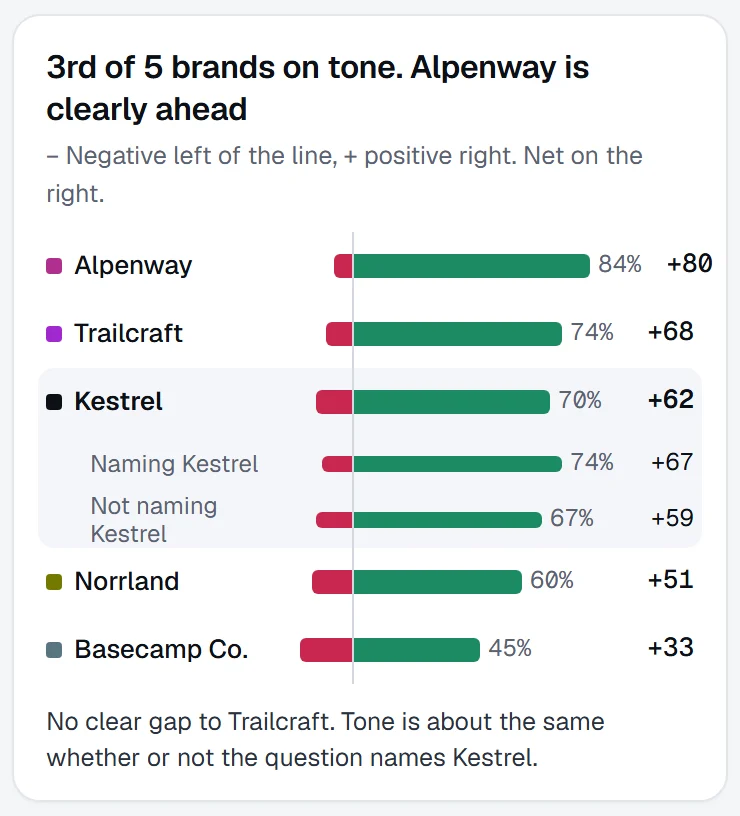
Find the qualities engines praise, criticise or never mention, against the brands you compete with, and decide which parts need work.
Respond
Match each issue to the response it needs
A missed use case needs a page. An objection needs an answer where buyers raise it. A wrong fact needs a correction at its source.
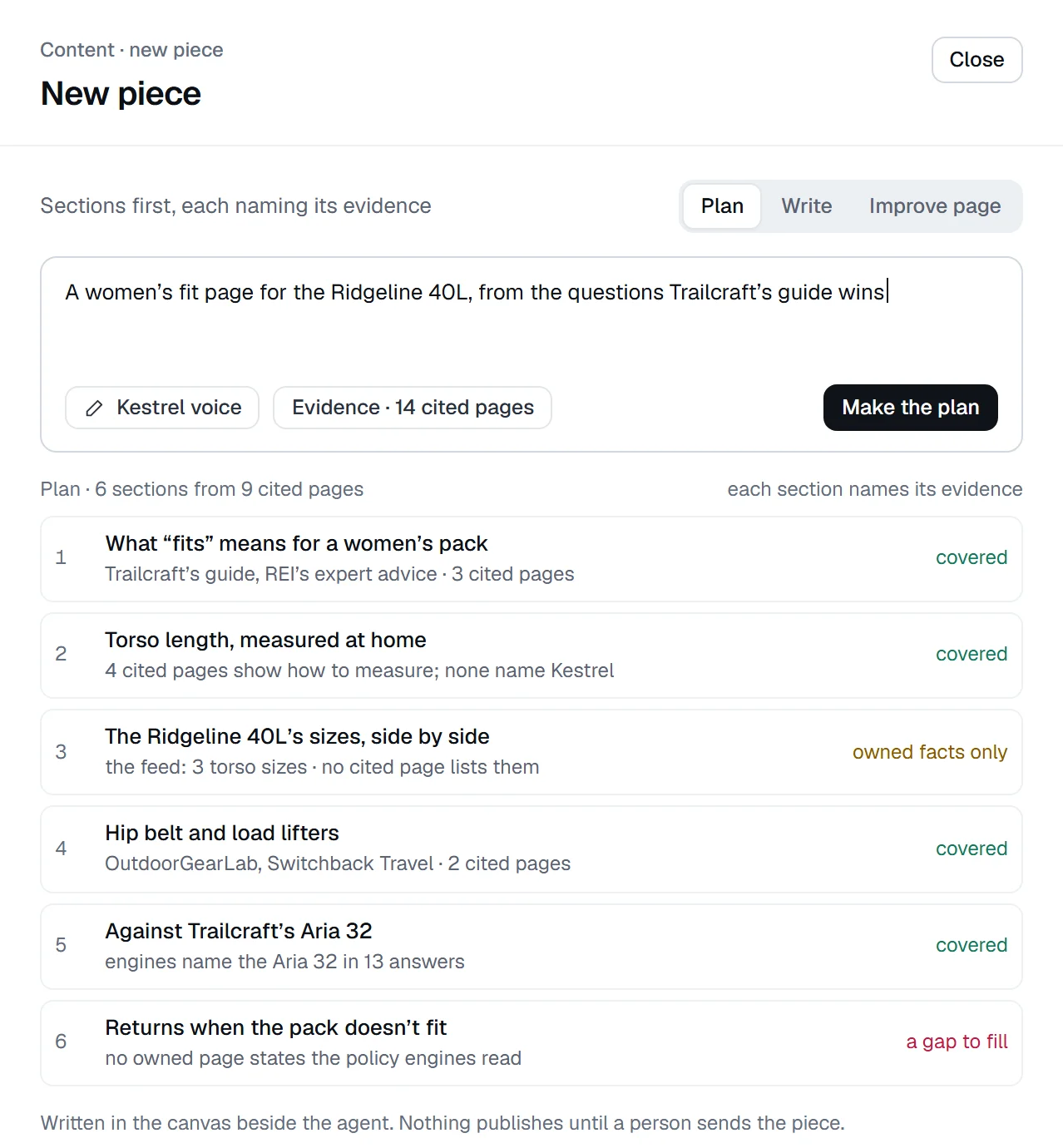
When engines answer a buyer’s questions from a competitor’s guide, plan your own page for that buyer from the pages engines cite.
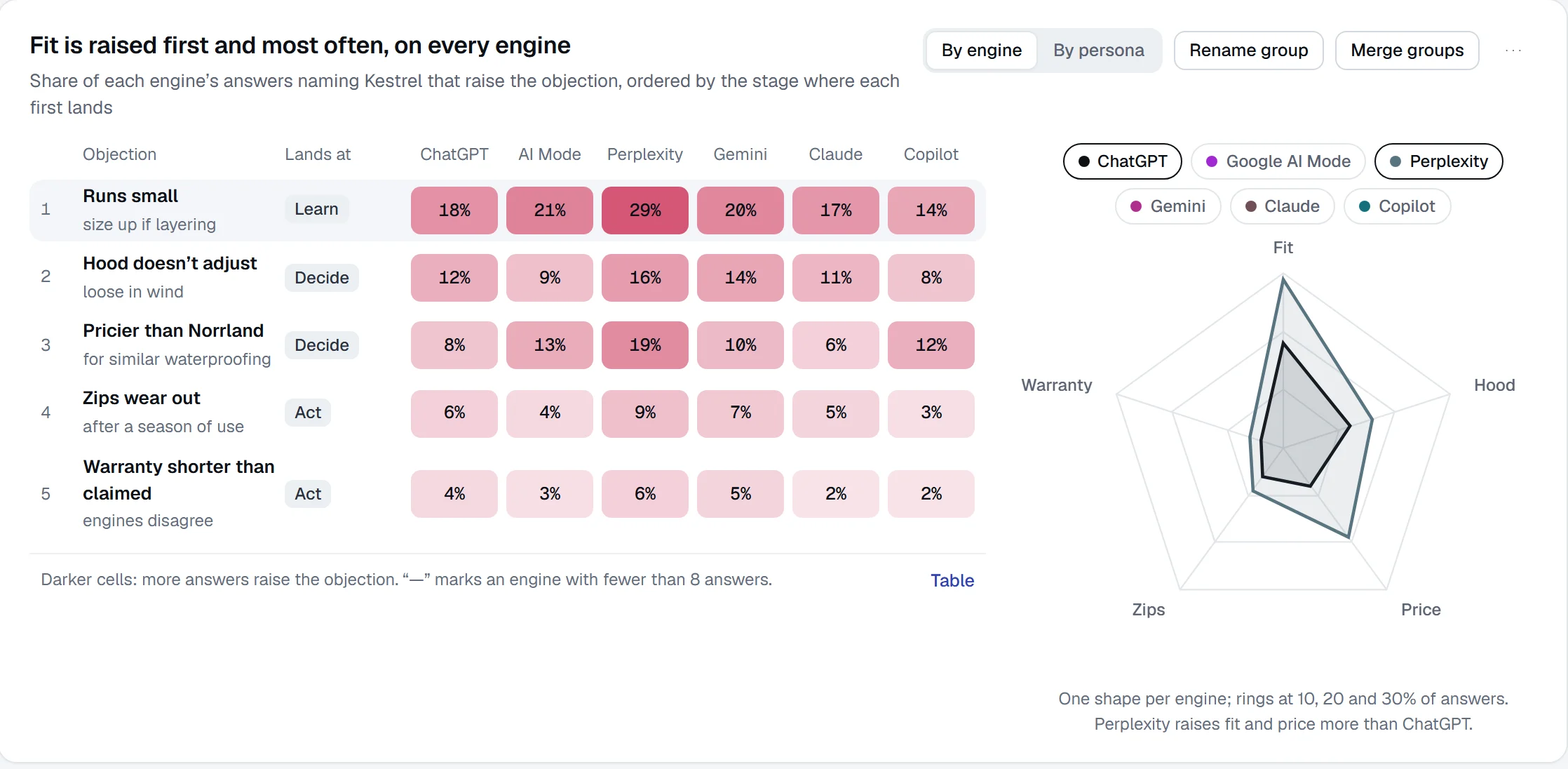
When engines call you pricier than a competitor, answer with a comparison that shows what the price buys, with the tests behind each claim.
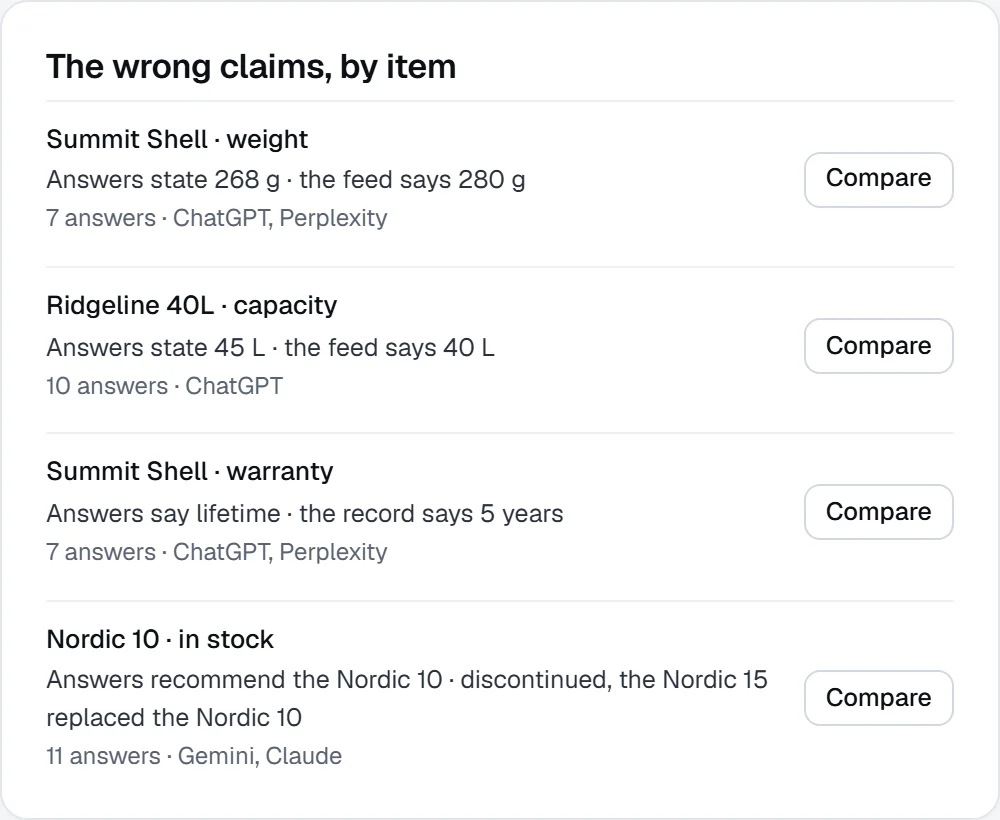
When answers state a wrong fact, correct the feed and your own page first, then the retailer page repeating the claim.
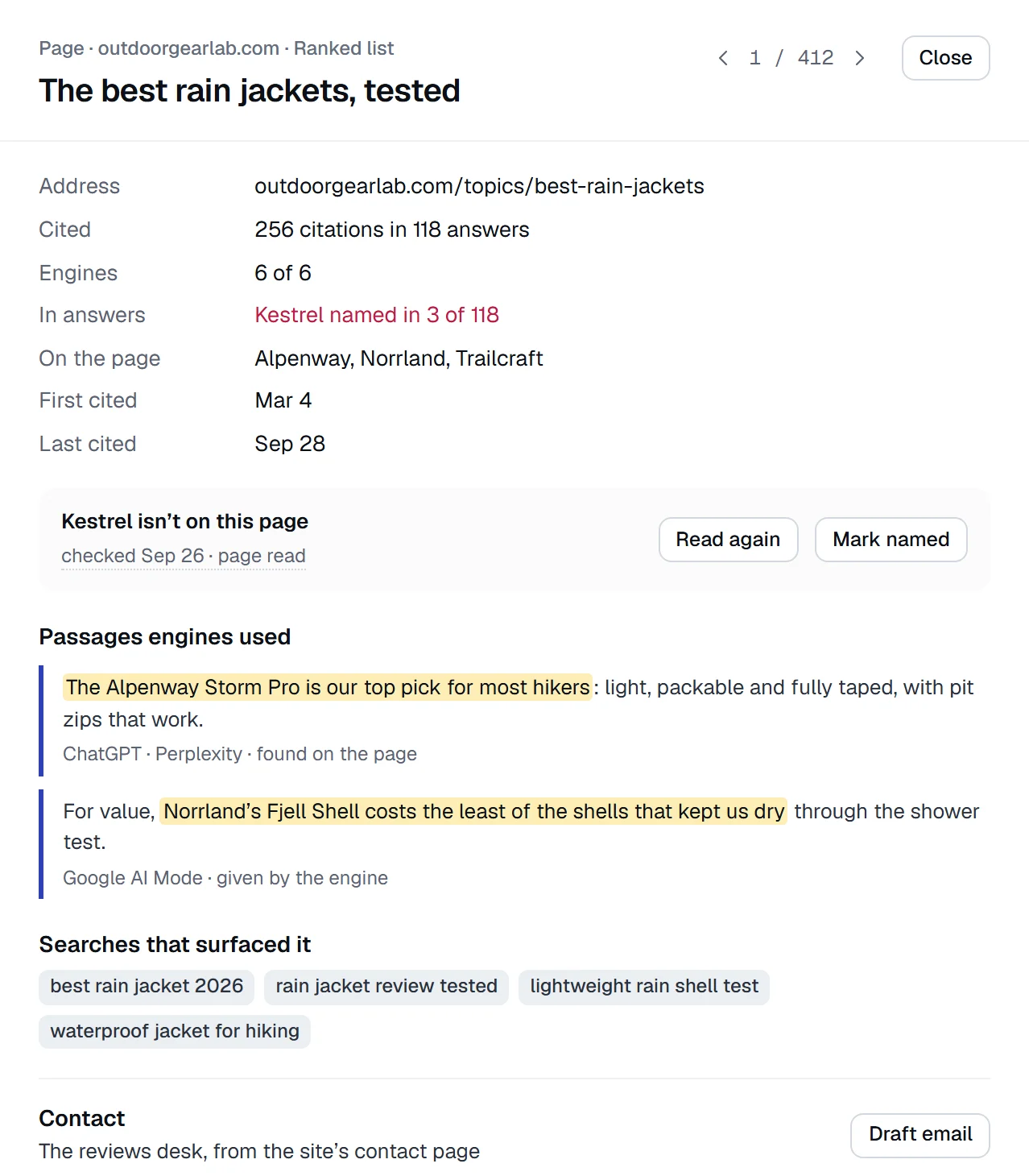
When a review engines cite leaves you out, pitch the reviews desk with test data an editor can use.
Sources
Plan source work like a media list
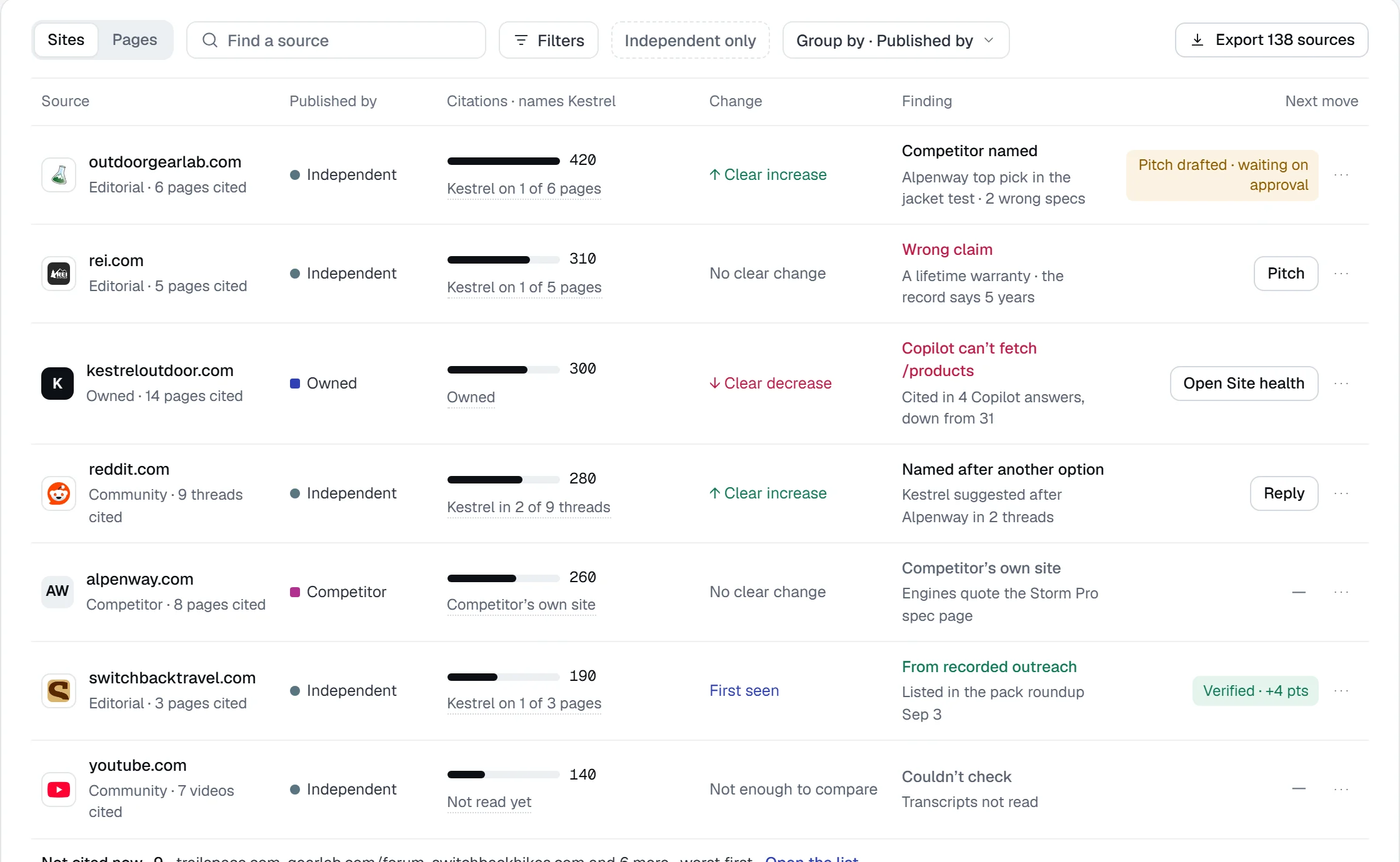
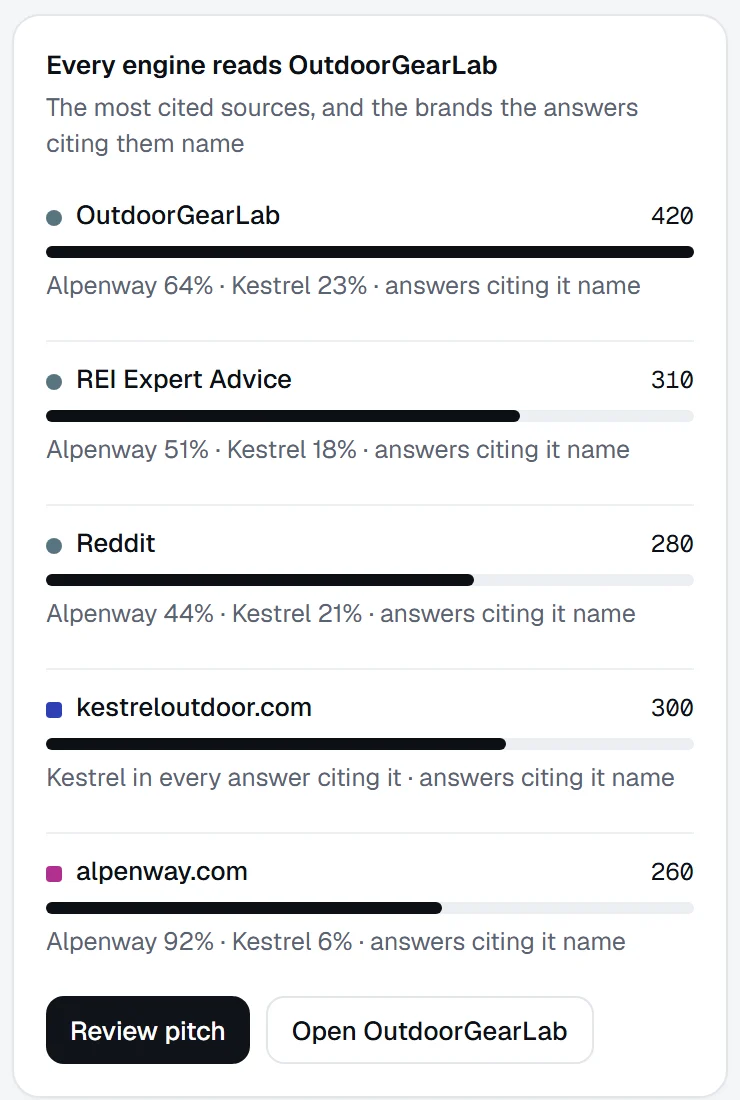
Rank the publications, retailers and communities engines read by citations and what they say about you, then give each its own move: a pitch, a correction or a reply.
Runs small: from an objection to clearer guidance.
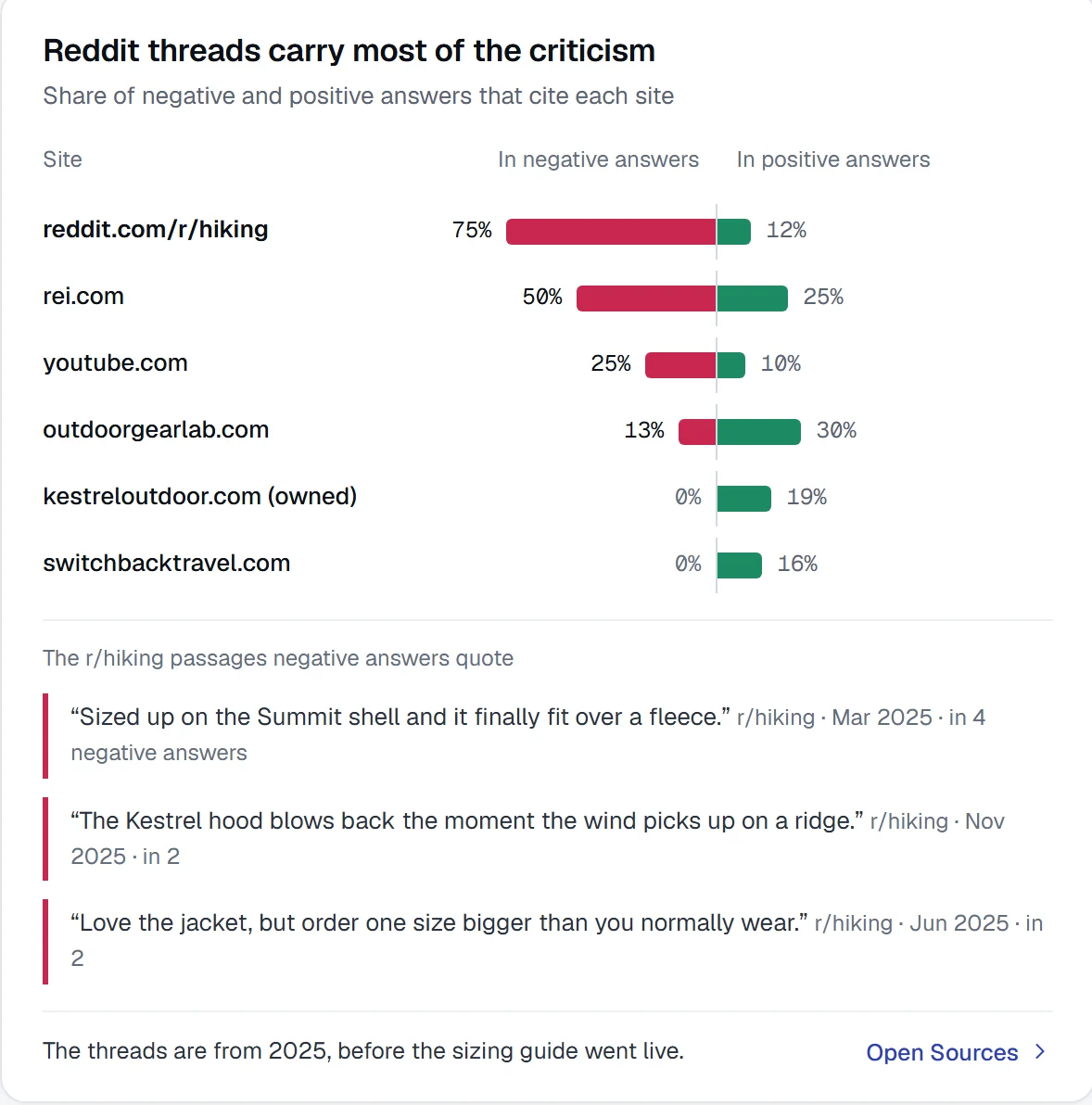
One objection can land while buyers are still learning, even with mostly positive tone. Trace the objection to its sources and answer the objection where buyers check.
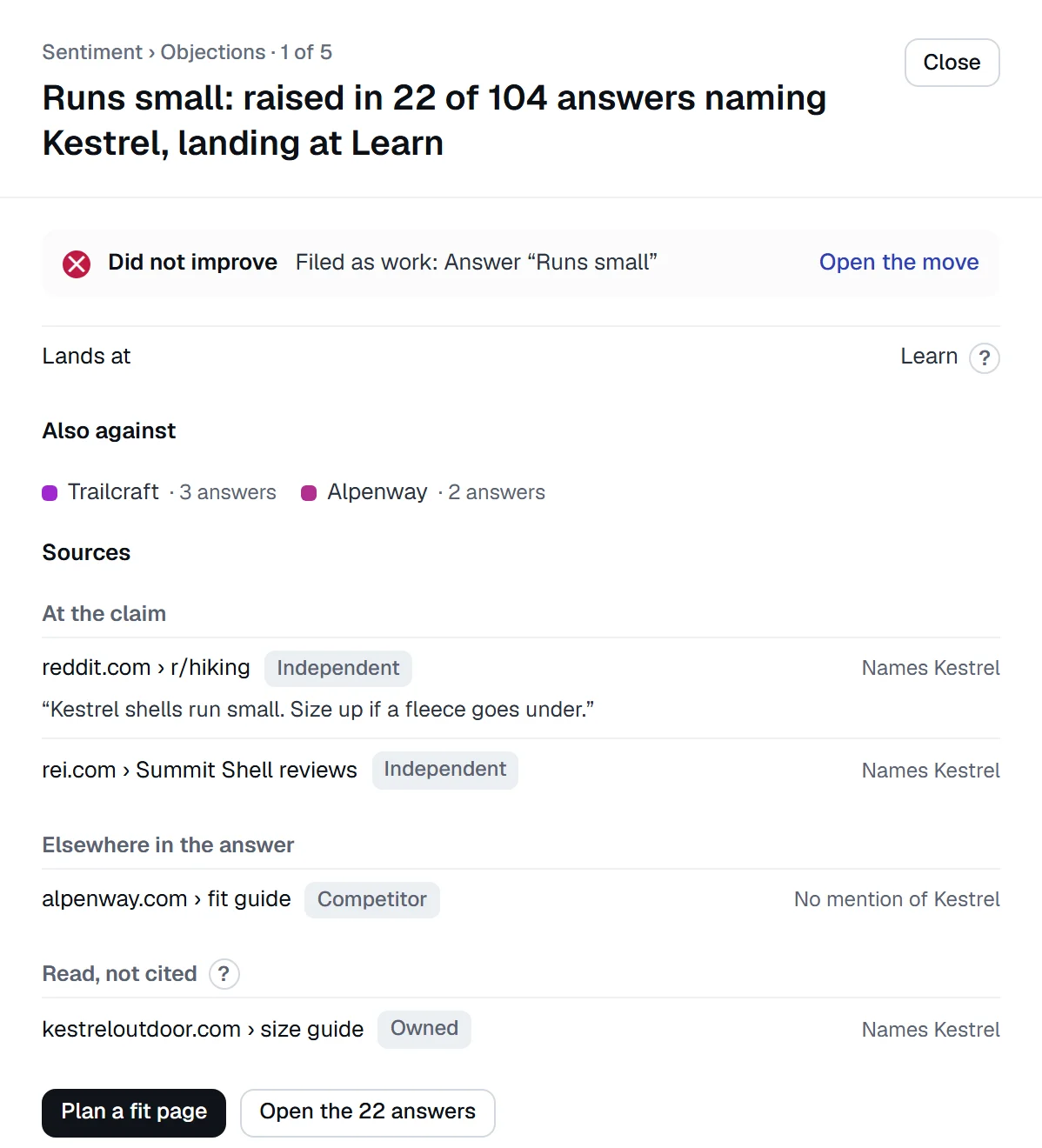
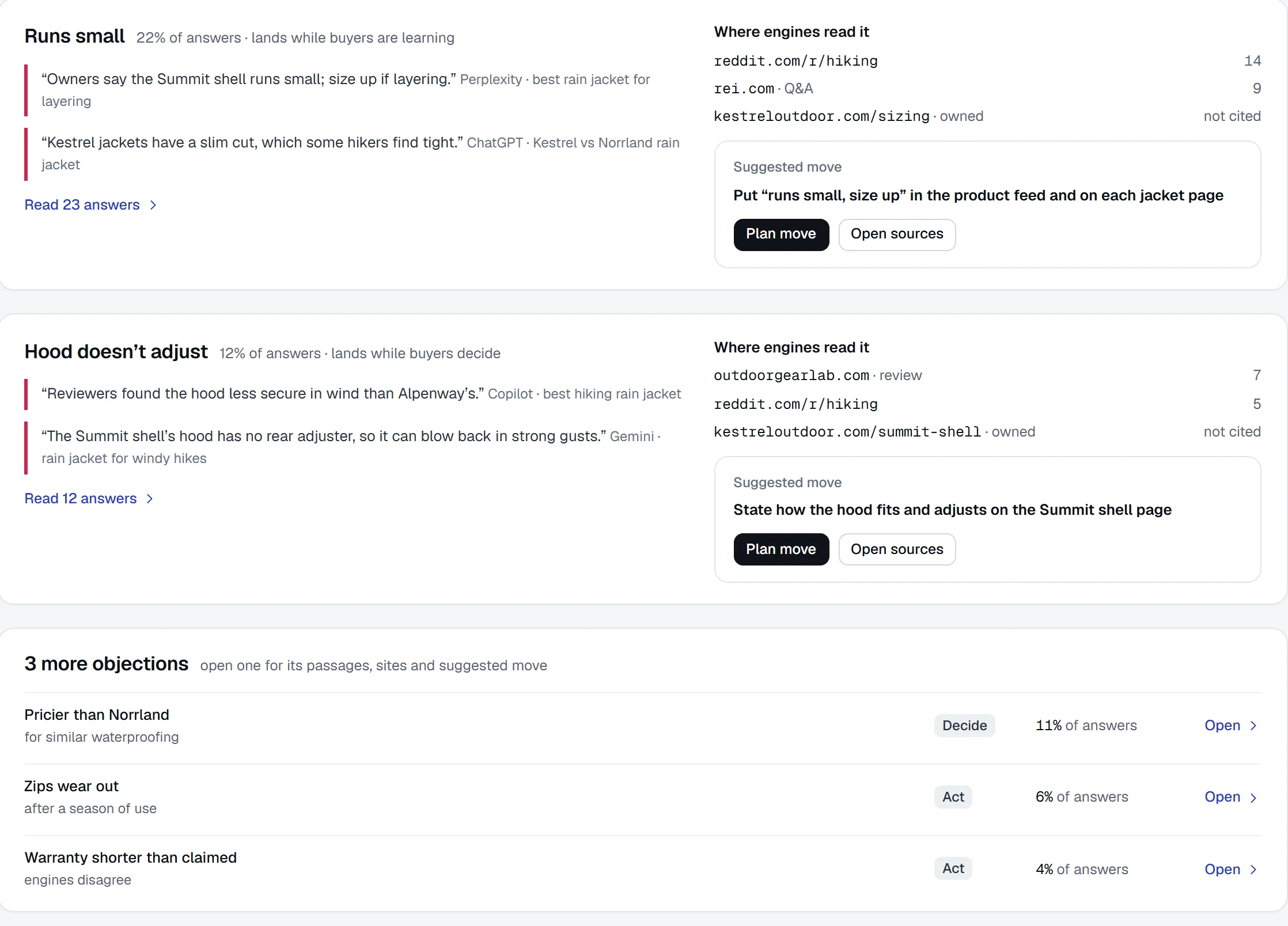
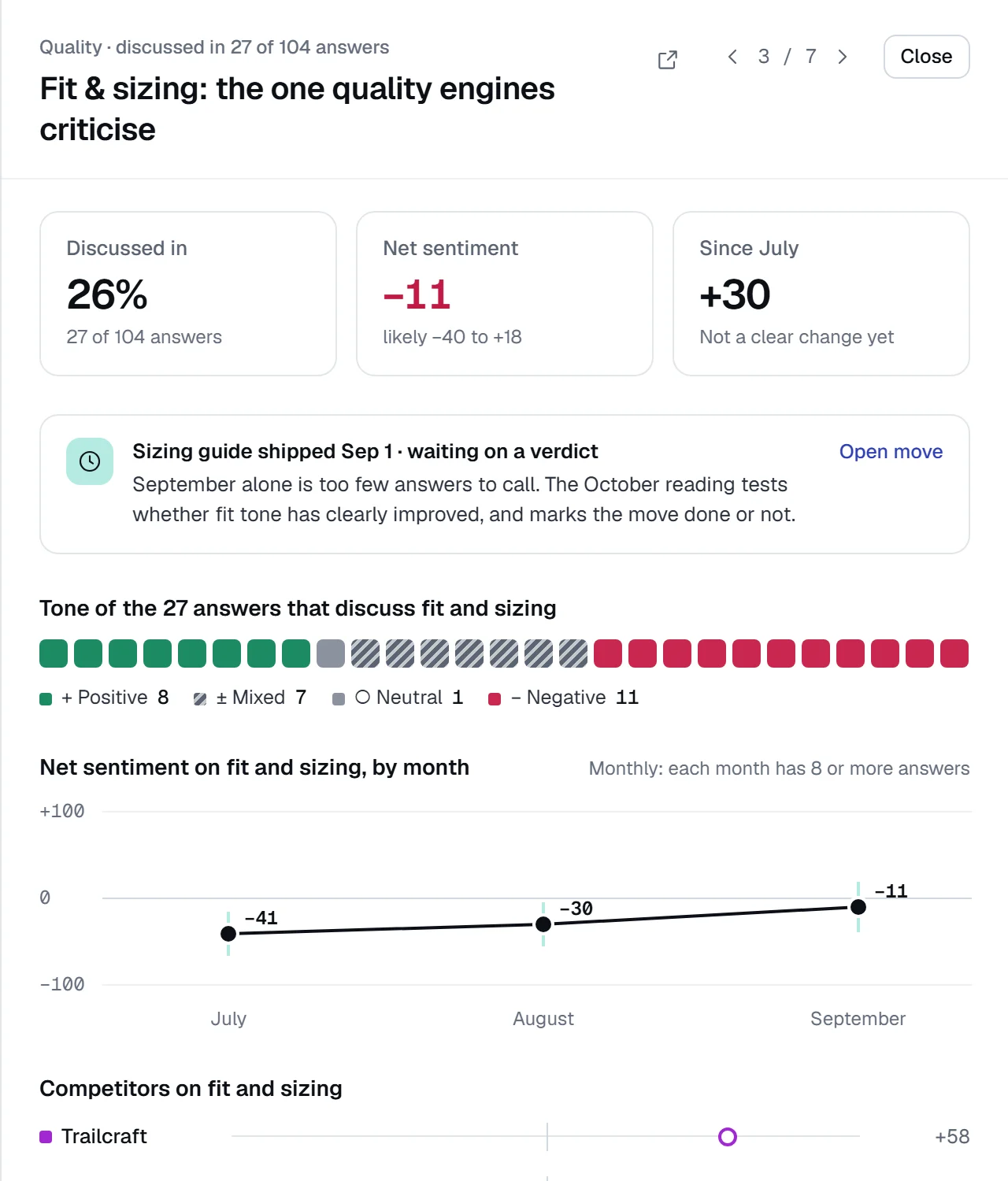
1Find how often an objection appears in answers that name you, at which buying stage, and whether your first fix changed it.
2Trace the objection to the sites engines take it from, and find whether your own site answers it.
3Put the guidance where buyers check product facts: in the feed and on every product page the objection touches.
4Track how answers describe the objection over time, and know when the guidance made a clear change.
Keep exploring.
Questions, answered.
Something else on your mind? Contact us.
No. You can change what engines read: your own pages and product data, and the publications, retailers and communities that write about you. Praised shows which sources carry each part of the description.
No. Praised drafts each reply or pitch from your approved facts and says who it is from. A person on your team reviews the draft, then posts or sends it.
It checks a public page’s readiness to be found, understood and cited. Ongoing tracking and work belong in the platform.
Answer the story where engines read it.
Read how AI describes you, trace each part to its sources, and answer with a page, a correction, a reply or a pitch. Check one page free, or explore how Praised reads what AI says about your brand.