AI visibility & competitors
Know where AI recommends you, and who wins instead.
Track the buying questions people ask AI. Find out where you’re named, recommended or cited, and which competitor is picked instead.
Accounts open from the waitlist. The website check is free, with no signup.

Track the questions that decide a purchase
Add the category questions, comparisons and needs your buyers describe. Group them by product, topic and market, and weigh each topic by its demand.
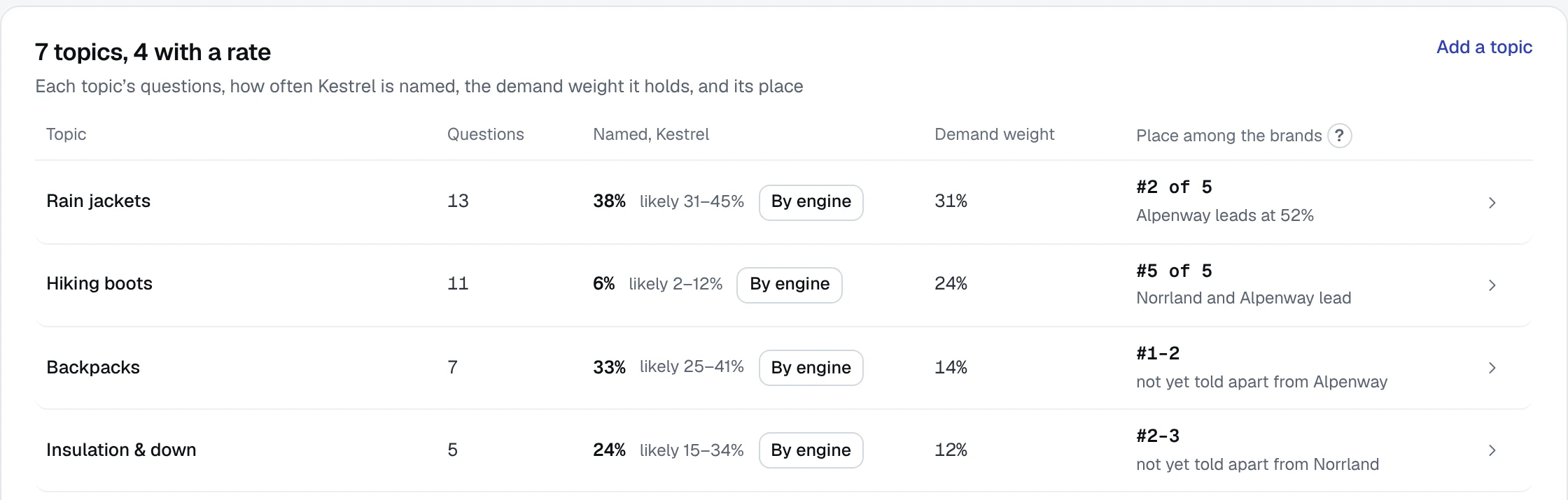
Find where you’re named and a competitor is chosen
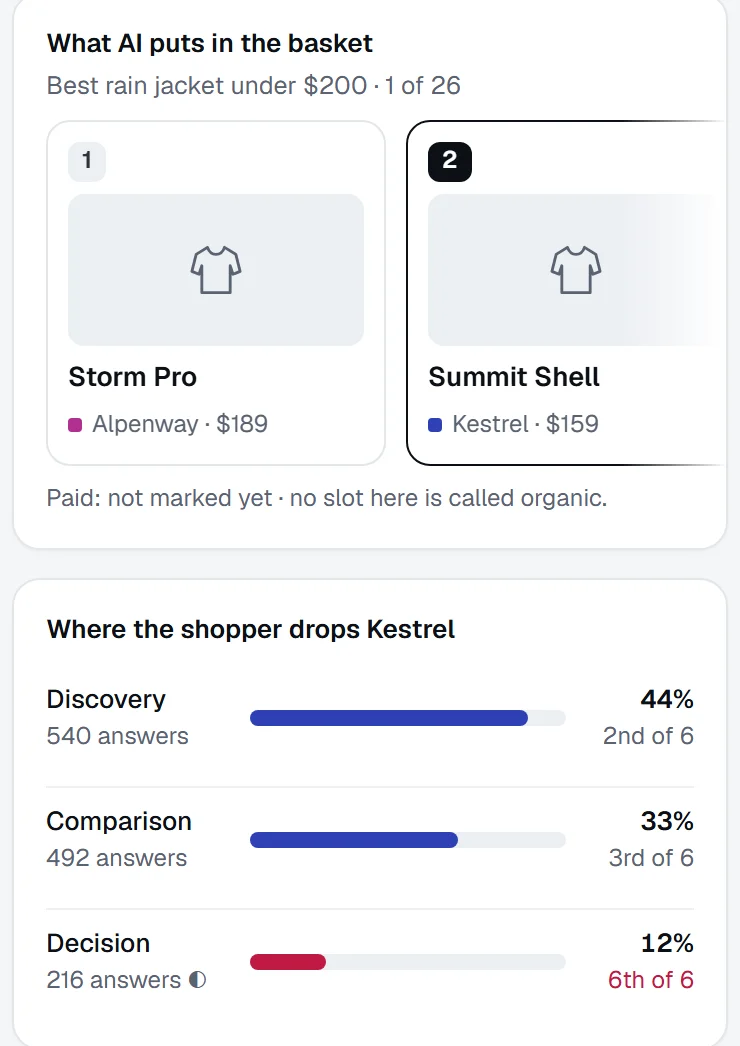
Named, recommended and cited are three different wins. The gaps between them show where you’re mentioned but a competitor’s product is chosen.
Investigate why the competing product is chosen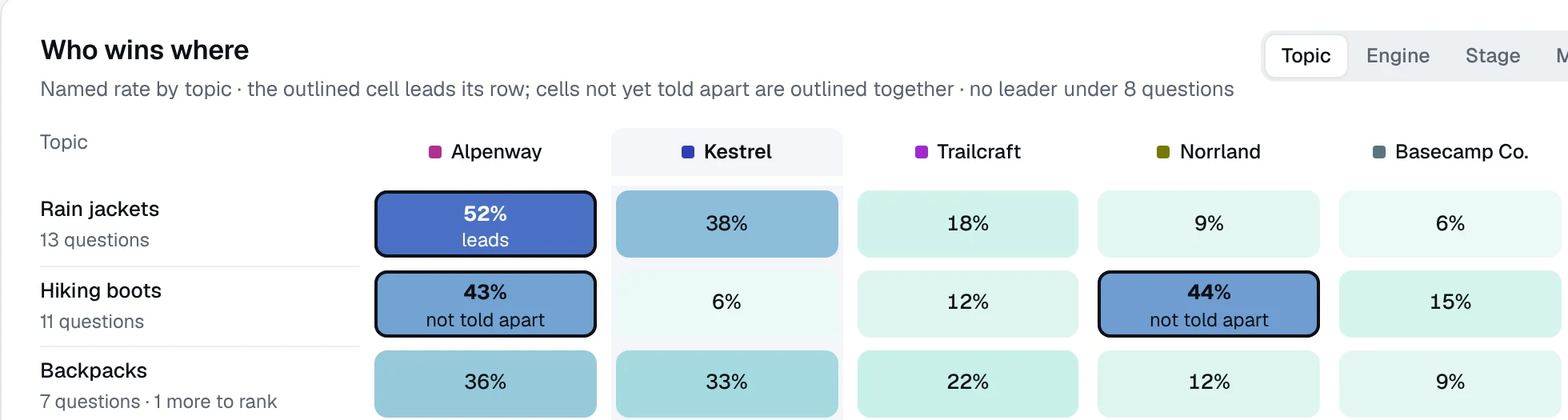
Match each gap to the work that closes it
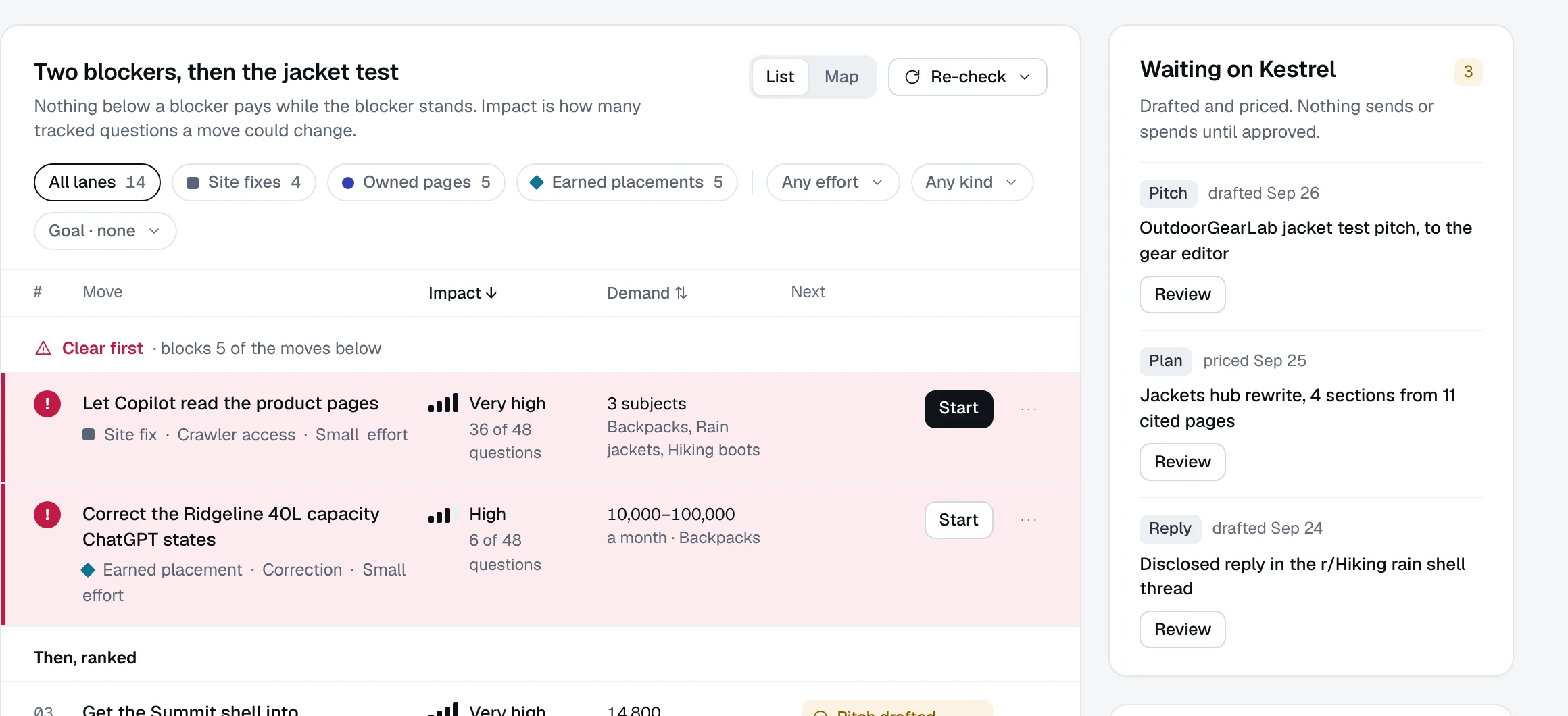
Each gap calls for different work: a clearer comparison, a source placement or a page fix. Next moves ranks the work by the answers each move could change.
Work on the description that loses the pick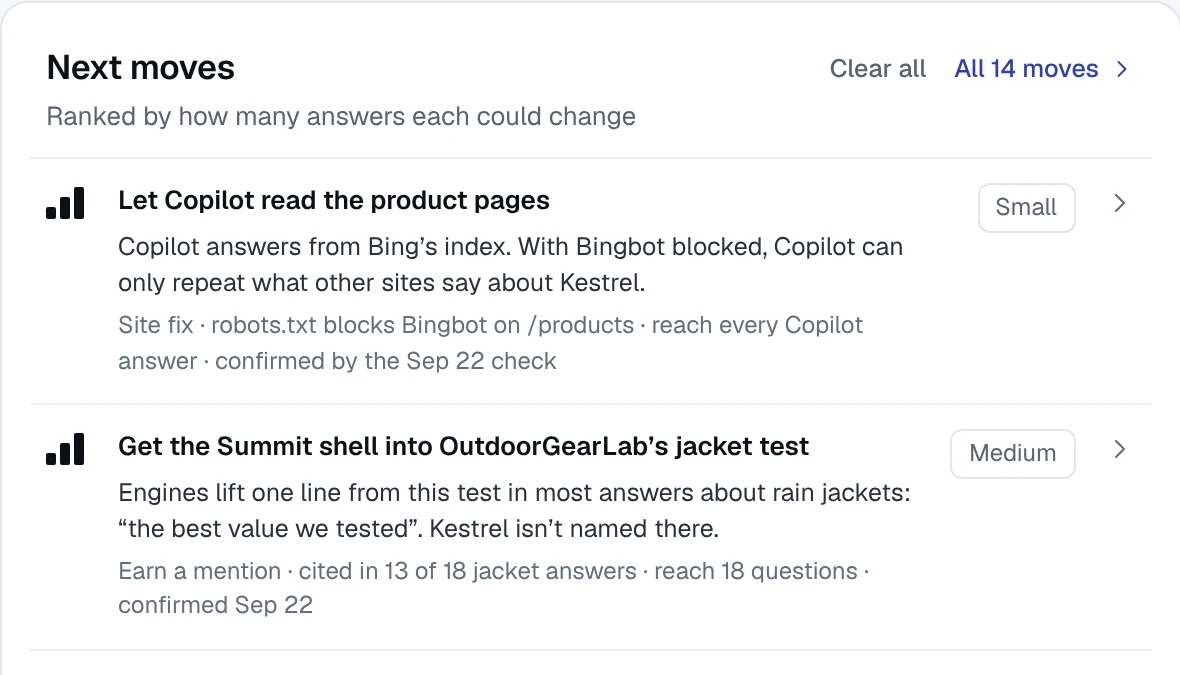
From the headline result to the reason behind it.
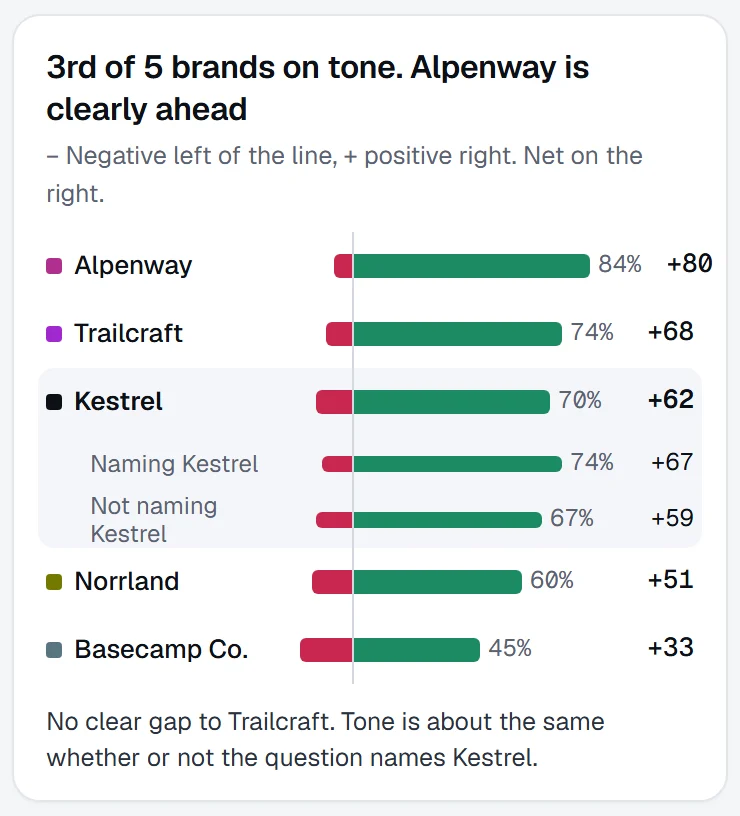
A healthy overall share can hide the questions you lose. Open one question to find who wins and why.
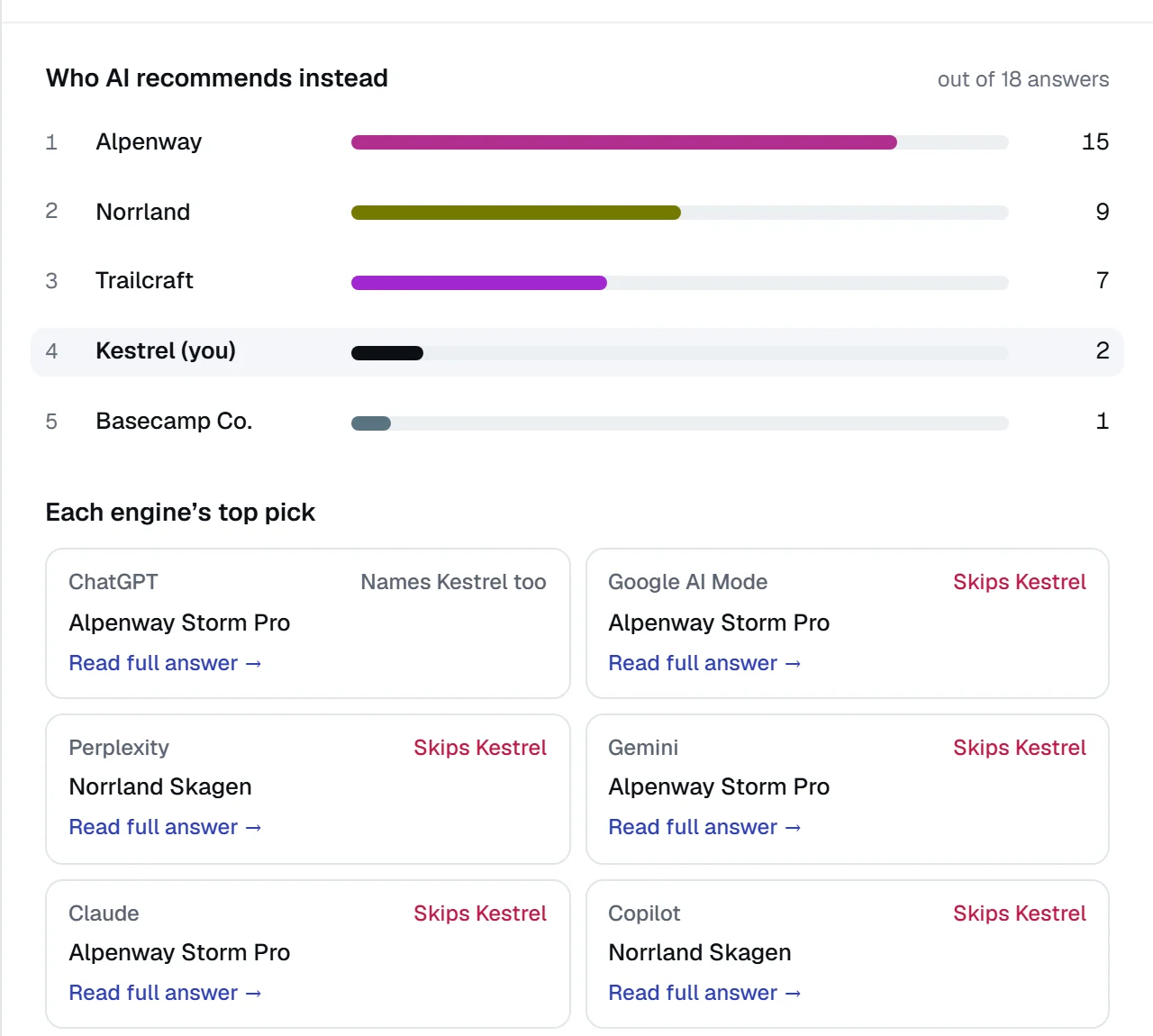
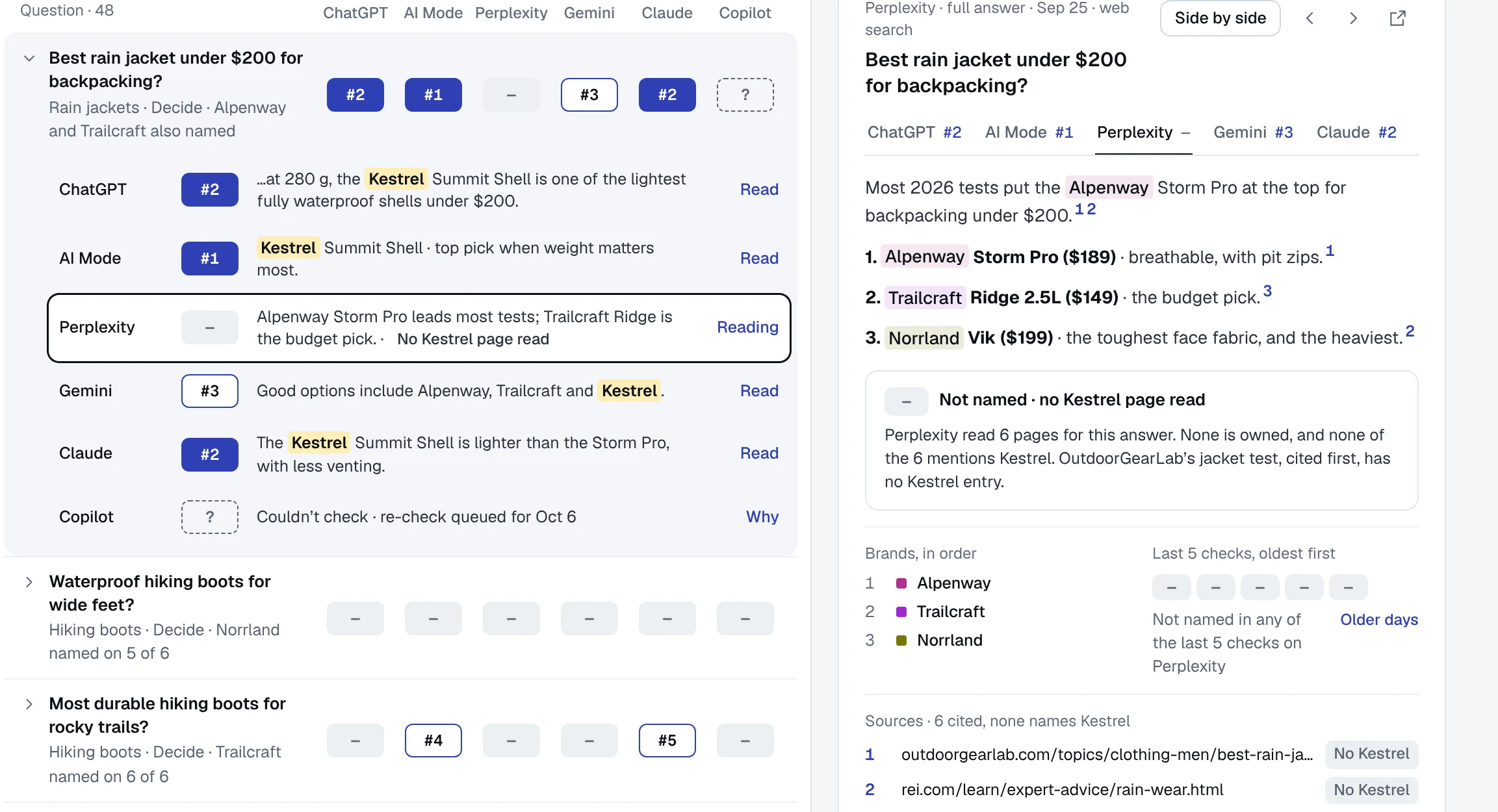
1Open a buying question to find which brand each engine recommends first, and how often you are named.
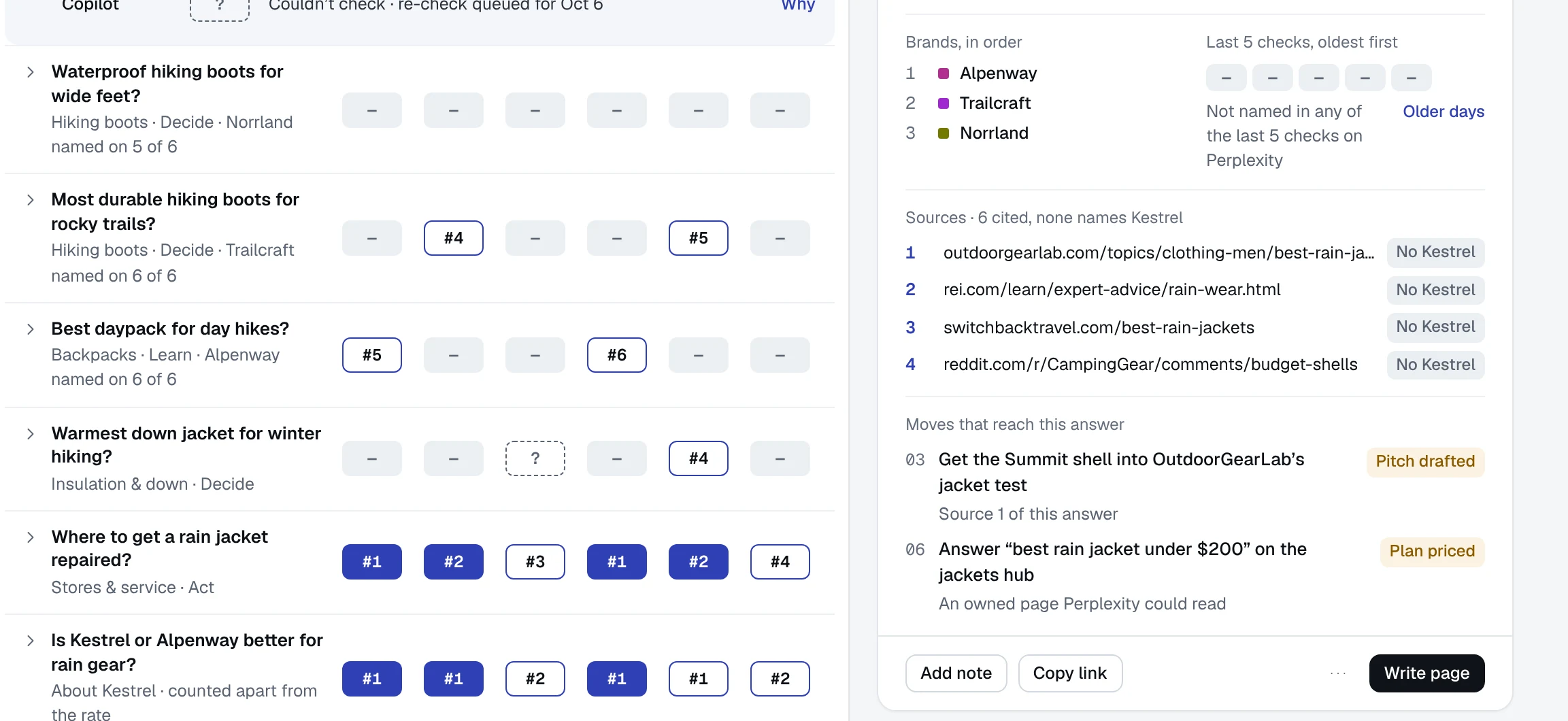
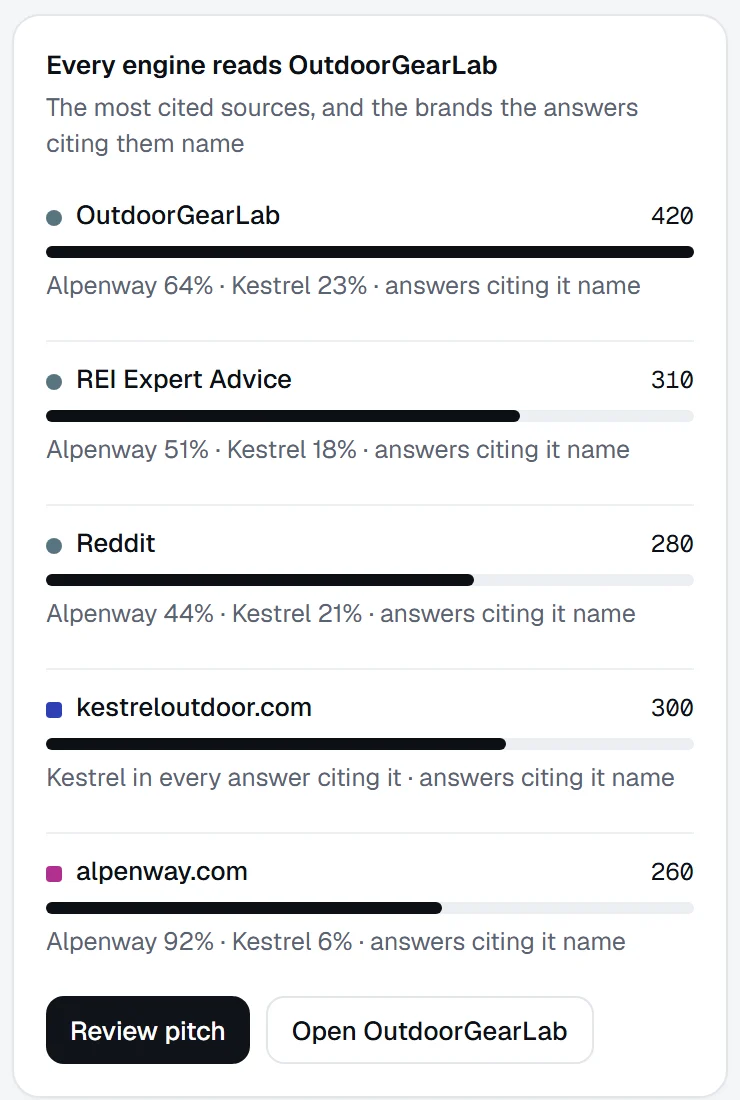
2Read the answer engine by engine, with the pages each engine read and whether any of them is yours.
3Find the source cited first, then choose the work: a pitch to that source or a rewrite of your own page.
4Pick the work that reaches the answer soonest. Drafts wait for your review, and later readings show whether the answers change.
Keep exploring.
Questions, answered.
Something else on your mind? Contact us.
No. A mention means the answer names you. A recommendation means the answer suggests you as a choice for the buyer’s need. Praised counts both, and counts cited pages separately.
Yes. Track questions for a brand, a single product or a category, in each market you sell in, and compare the results side by side.
ChatGPT, Claude, Gemini, Perplexity, Copilot and Google AI Mode. Choose the platforms for each question set and compare them side by side.
It checks a public page’s readiness to be found, understood and cited. Ongoing tracking and work belong in the platform.
Find the question where a competitor wins.
Track your buying questions, open the answer behind each result and take the gap to research, content or source work.